
Jamaica has told the United Nations that the world’s most climate-exposed nations are being left to pay for a crisis they did not cause, calling for faster, bigger adaptation finance and a properly funded Loss and Damage Fund.
Main photo: Jakub Hałun / Wikimedia Commons, CC BY 4.0
A warning in New York
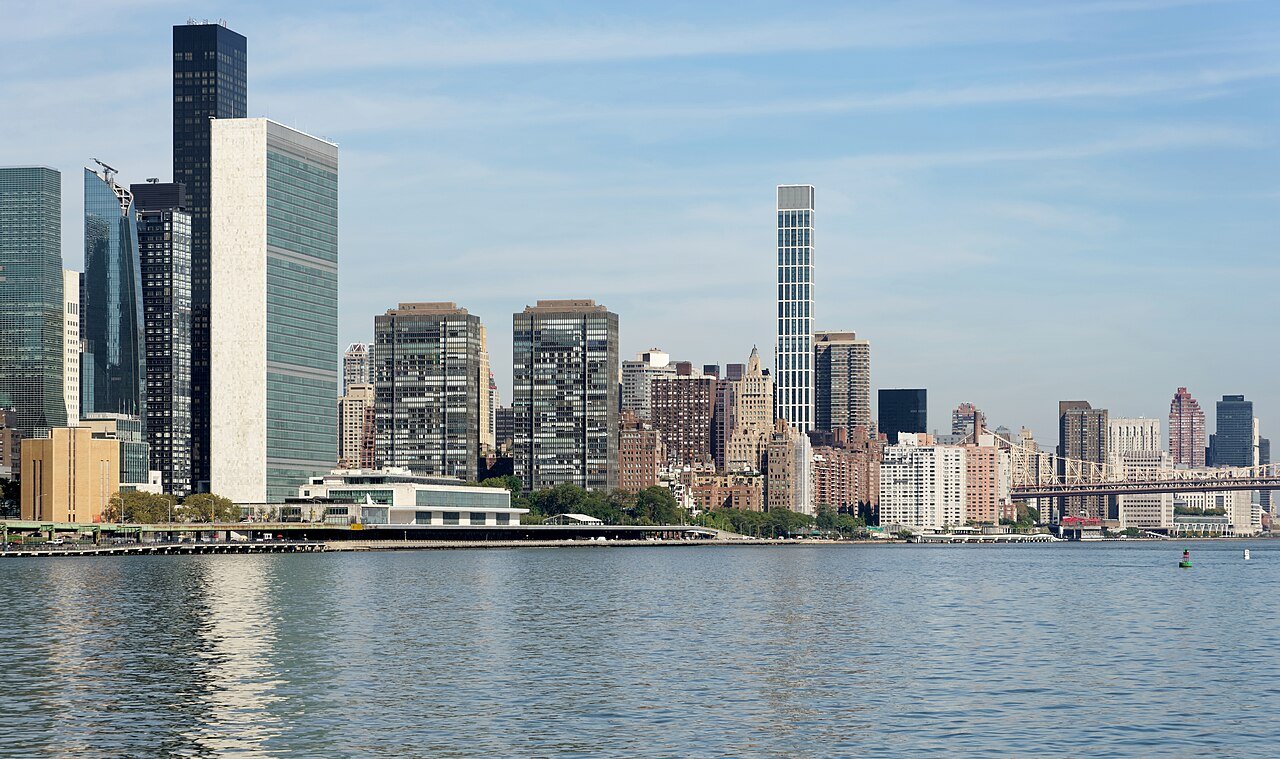
Matthew Samuda, Jamaica’s Minister of Water, Environment and Climate Change, delivered the message at the UN’s Solutions Dialogue on Financing Adaptation in New York, according to the Jamaica Observer.
He argued that international climate funding for vulnerable countries remains far short of what is needed, and that every year of delay makes the eventual bill larger.
The numbers behind the case
Samuda set out Jamaica’s own experience. The island needs an estimated US$5 billion for its water sector alone, he said, and has endured four severe droughts and record temperature extremes in the space of five years.
He also pointed to Hurricane Melissa, which struck in October 2025 as the most powerful storm in Jamaica’s recorded history. By his account, the damage was equivalent to 56 per cent of Jamaica’s GDP — compared with roughly 1 per cent of US GDP for Hurricane Katrina. The comparison, he suggested, shows how the same kind of disaster can be a setback for a large economy but a national emergency for a small island state.
Ideas on the table
Beyond calling for the Loss and Damage Fund to be fully capitalised, Samuda proposed new sources of money, including a modest per-passenger levy on air travel. The obstacle, he argued, is not a lack of innovative ideas but a lack of political will among the richest nations.
Why it matters
Caribbean nations, most of them majority-Black and heavily reliant on tourism, farming and fragile water systems, sit on the front line of the climate emergency despite producing a tiny share of global emissions. Jamaica’s intervention adds to a long-running push by small island states and African governments for climate finance that reflects historical responsibility.
At home, the pressure is already visible in dry taps and rising food prices. Read our earlier report: Drained by drought – Jamaicans urged to conserve as water woes worsen.
Whether wealthy nations respond with real money, rather than pledges, will be tested at the next round of UN climate talks.
Leave a Reply