
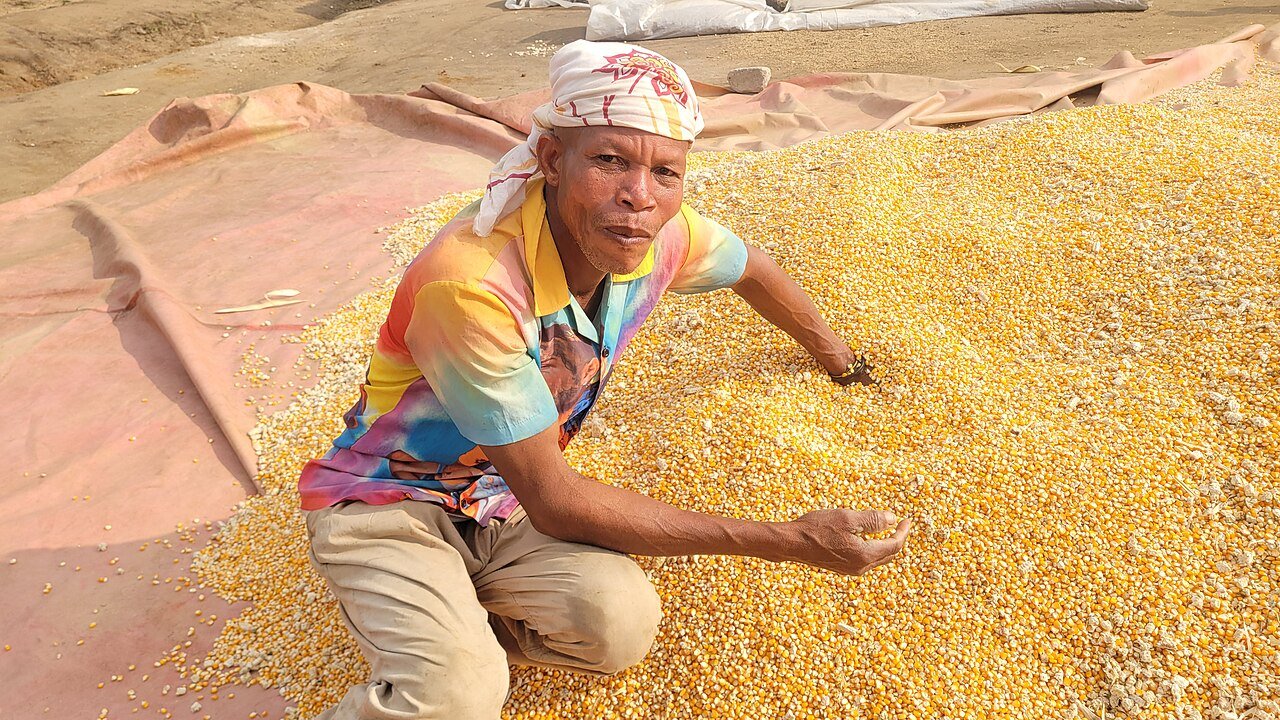
Ghana says its flagship Feed Ghana Programme is already cutting the country’s reliance on imported food, with maize output now exceeding national consumption and rice and poultry self-sufficiency climbing sharply.
Main photo: Pascal Kings / Wikimedia Commons, CC BY-SA 4.0
Bright Kwadzo Demordzi, the programme’s National Coordinator, told the Ghana News Agency on the sidelines of the 2nd West Africa Agri Show in Accra that the gains had come in the 17 months since the initiative launched in April 2025.
The numbers
According to Demordzi, maize production has passed 100 per cent of what Ghana consumes. Rice self-sufficiency has risen from 42 per cent to 56 per cent, leaving surplus paddy in the fields, while poultry self-sufficiency has climbed from just 5 per cent to 21 per cent. He expects poultry to reach full self-sufficiency within two to three years.
Tomato growers in the main producing areas have also recorded strong harvests, although he acknowledged that finding buyers and securing reliable off-take remains a challenge.
He credited government backing, including the Nkoko Nkitinkiti poultry scheme, fertiliser and input support, and improved irrigation. The 2025 budget set aside GH¢1.5 billion for agriculture-sector initiatives including the programme, and the 2026 budget allocated GH¢245 million to scale up food security and agro-industrial value chains.
Phase two: from harvest to market
The programme enters its second phase this month. Demordzi said the focus will shift from growing more to selling better, linking farmers with buyers, processors and new storage and transport technologies so that abundant harvests translate into higher incomes. He said further interventions were expected to help bring food prices down by December.
Speakers at the show stressed the same point. Françoise Sayi, Country Director in Benin for the Global Alliance for Improved Nutrition, said production alone is not enough and that West Africa must also store, process and market food so that safe, affordable nutrition reaches every household. Organisers Azalix Business Media said companies from more than 25 countries attended.
Why it matters
Food import bills drain foreign exchange across Africa and leave households exposed to global price shocks. If Ghana’s figures hold, the programme offers a home-grown model for import substitution that other countries in the region will study closely.
The real test now is the one Demordzi himself identified: turning record harvests into reliable markets and fair prices for the farmers who produced them.