
# Article
Millions of people across Africa are being forced to abandon their homes and livelihoods due to internal conflicts, environmental disasters, and disease outbreaks, yet their struggles remain largely invisible in global humanitarian discussions that tend to focus on those who flee across international borders. This gap in attention and resources creates a critical blind spot in understanding Africa's displacement crisis and addressing the needs of some of the continent's most vulnerable populations.
The magnitude of internal displacement in Africa has grown substantially in recent years, driven by multiple intersecting crises. When communities face threats to their safety and survival, the immediate response is often to relocate, whether to other regions within the same country or to neighboring urban centers. Unlike refugees who cross into other nations and trigger international humanitarian protocols, internally displaced persons frequently operate outside formal assistance frameworks, making them harder to track, count, and support with coordinated aid efforts.
A significant illustration of how quickly internal displacement can escalate emerged in the eastern Democratic Republic of Congo in May 2026, when the Bundibugyo strain of Ebola surfaced in the region. The outbreak rapidly evolved into a major public health emergency, forcing large numbers of people to flee their communities as fear spread and healthcare systems became overwhelmed. The virus's emergence underscored how disease outbreaks can disrupt entire regions, displacing populations and stretching already fragile humanitarian infrastructure beyond capacity.
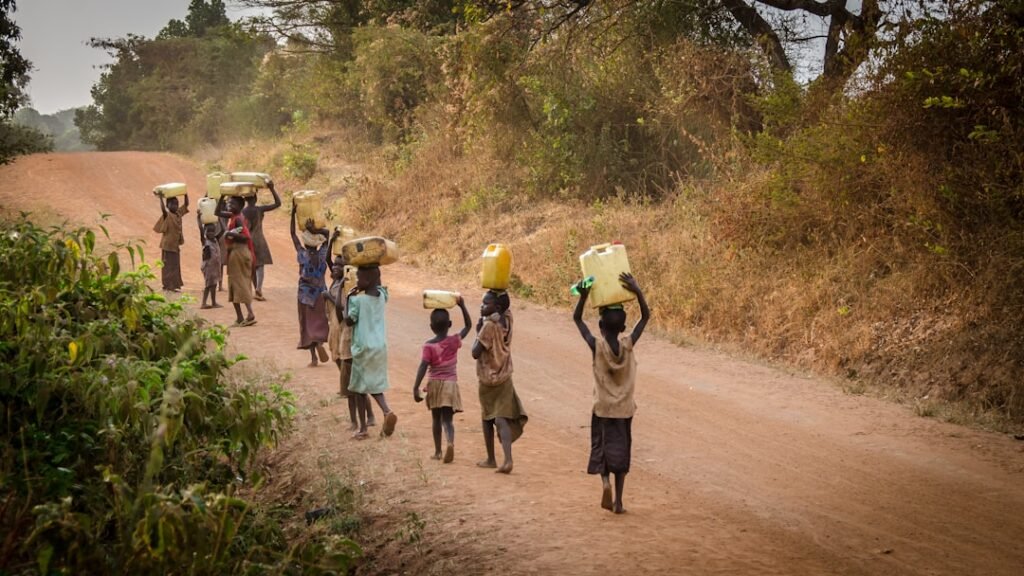
The consequences of being internally displaced without crossing borders are profound and multifaceted. These populations often lack the legal protections and international humanitarian support that accompany refugee status. They may struggle to access basic services including healthcare, clean water, food assistance, and shelter. Children in these situations frequently lose access to education, perpetuating cycles of poverty and vulnerability. Additionally, internally displaced persons may face discrimination or exploitation in the communities where they seek refuge, particularly if resources are already scarce.
The oversight of internally displaced populations stems partly from how the international humanitarian system is structured. Organizations and funding mechanisms are frequently oriented toward cross-border migration, refugee camps, and situations that generate international attention. Internal displacement, by contrast, can be fragmented and dispersed across wide geographic areas, making it difficult for aid organizations to mount coordinated responses. National governments, meanwhile, may lack the capacity or resources to adequately address displacement crises on their own, leaving populations in a precarious gap between local and international support systems.
Understanding the full scope of Africa's displacement challenge requires recognizing that borders are merely one dimension of a much larger humanitarian picture. Communities affected by armed conflict, drought, flooding, disease, and economic collapse move within their own countries in search of safety and survival, often enduring hardships comparable to those experienced by international refugees. Yet their invisibility in global discourse means their needs compete for attention and resources in crowded funding landscapes where refugee crises dominate headlines.
Addressing this oversight demands a reorientation of humanitarian focus and resources. Governments, international organizations, and civil society must develop more robust mechanisms for identifying, counting, and assisting internally displaced populations. This includes strengthening national capacity to respond to displacement crises, improving data collection and monitoring systems, and ensuring that funding streams account for the full spectrum of displacement beyond border crossings.
As Africa continues to grapple with intersecting crises ranging from conflict to climate change to disease outbreaks, the numbers of internally displaced persons will likely continue growing. Without deliberate efforts to elevate their visibility and ensure they receive adequate support, millions of Africans will remain marginalized from the humanitarian assistance systems designed to protect vulnerable populations.
Source: AllAfrica News: Africa | Published: Wed, 19 Aug 2026 05:07:03
Leave a Reply