
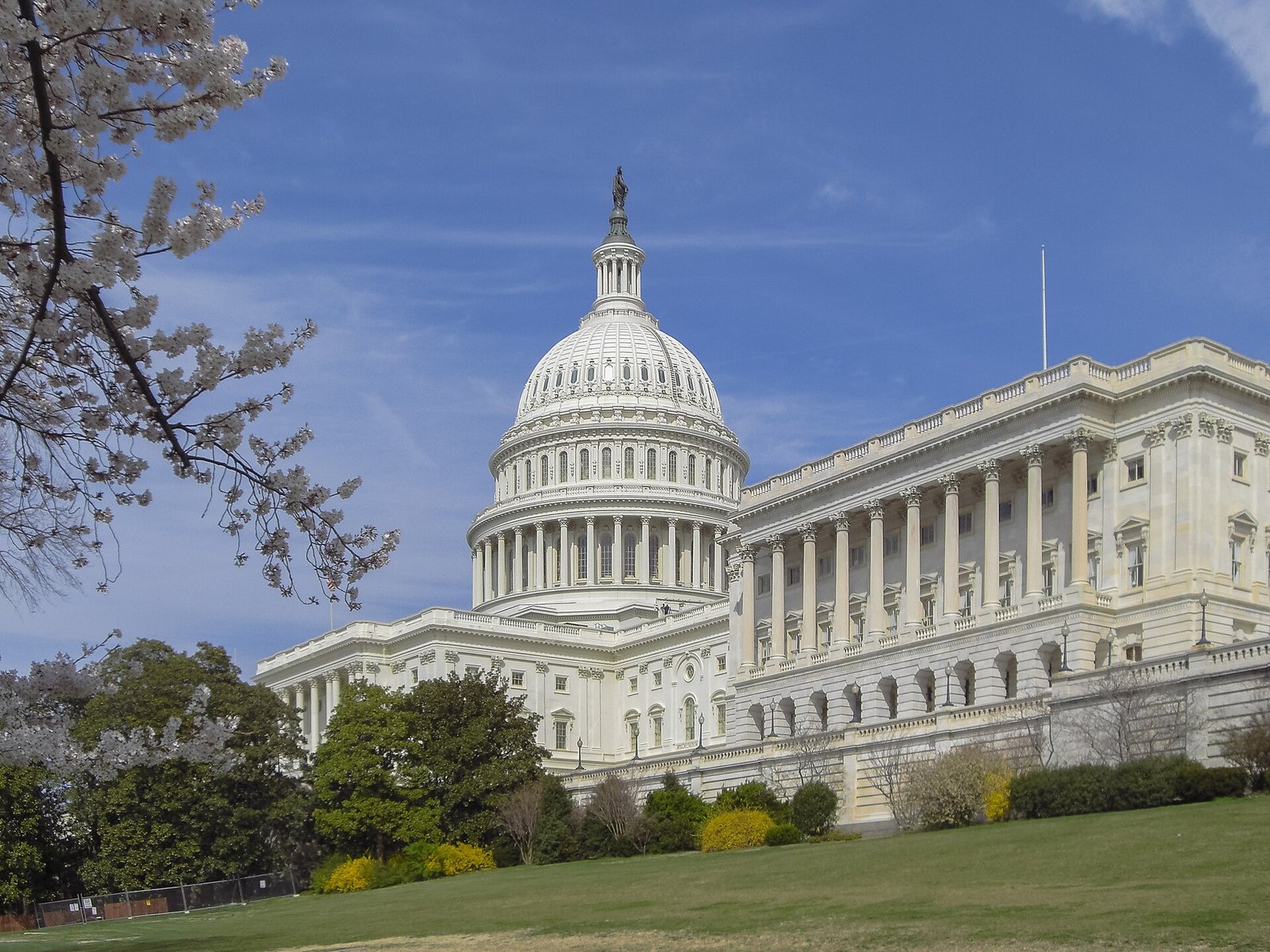
Photo: Diego Delso / Wikimedia Commons, CC BY-SA 3.0
Congresswoman Yvette D. Clarke has joined House leaders demanding that the US Department of Health and Human Services withdraw a proposed English-only instruction rule for Head Start.
Congressional challenge
Clarke, the Brooklyn representative and chair of the Congressional Black Caucus, signed a 6 October letter to Health and Human Services Secretary Robert F. Kennedy Jr alongside leaders from the Congressional Asian Pacific American Caucus and Congressional Hispanic Caucus.
DGBN has also reported on Jamaica-linked Everton Blair headed to US House of Representatives.
The lawmakers oppose a proposed overhaul of Head Start standards that would require education to be conducted in English, while ending longstanding protections designed for children learning English alongside another home language.
The coalition said the rule would affect almost 290,000 dual-language learners — close to 40 per cent of Head Start enrolment — and could make it harder for families to participate in their children’s education.
What the proposed rule would do
The Administration for Children and Families published the proposal in August as part of a broader plan to reduce federal requirements in Head Start, the early-childhood programme serving low-income children and their families.
Under the proposal, all Head Start education would be conducted in English. There would be an exemption for American Indian and Alaska Native programmes using tribal languages to further cultural heritage, while other programmes could seek waivers.
The agency says the changes would reduce red tape, give providers more local flexibility and help expand access. HHS has argued that early exposure to English will better prepare children for school and engagement in English-language settings.
For more context, read DGBN’s coverage of Ramaphosa launches FuturePHARMA hub to build South Africa’s medicine-making capacity.

But the department’s own regulatory analysis acknowledges that English-only instruction could particularly affect programmes serving high numbers of dual-language learners. It estimates that 33.4 per cent of non-tribal Head Start classrooms may be impacted.
Concerns over access and assessment
Clarke and her colleagues argue that the proposed language change conflicts with requirements in the Head Start Act for culturally and linguistically appropriate services.
They said removing bilingual staffing and language-access provisions could obstruct communication between parents and educators, particularly where caregivers do not primarily use English at home.
The lawmakers also raised concerns about developmental assessments. They warned that testing a young child in a language they do not sufficiently understand may wrongly identify ordinary second-language development as a delay — or overlook a genuine need for intervention.
The group said providers could also face new costs from changing curricula, replacing classroom materials and retraining staff, despite the rule being framed as a reduction in federal burden.
Why it matters for Black and Caribbean communities
For Black immigrant families, including Caribbean, African and Afro-Latin communities, language access can determine whether a parent can fully engage with a child’s earliest education, health support and developmental services.
Related DGBN reporting includes Super Eagles fight back from 3-1 down to draw 3-3 with Russia.
For wider context, see Ivory Coast 0-1 Cameroon: Nsongo wins it for the Indomitable Lions on Diajem Sports Network.
Clarke’s intervention places the Congressional Black Caucus within a wider challenge to a proposal that critics say would weaken support for multilingual children while they are learning English. The rule remains a proposal and has not been finalised.