
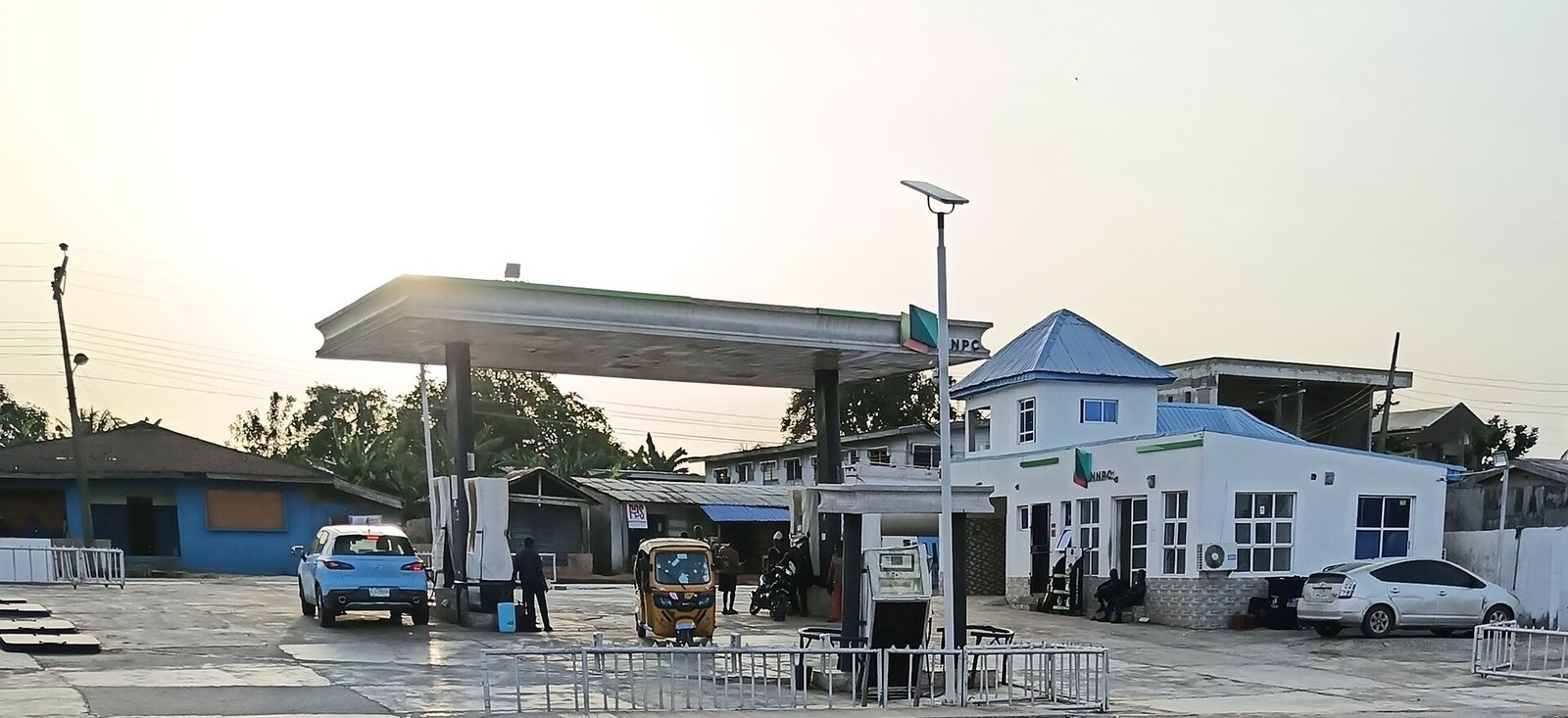
Nigeria’s main labour centre has given the federal government two weeks to bring down petrol prices, just as Abuja rolled out a 30-day discount at NNPC stations that critics are already calling a short-lived fix.
Main photo: Ourlib / Wikimedia Commons, CC0
The Nigeria Labour Congress (NLC) issued the ultimatum after a joint meeting of its National Executive Council and Central Working Committee at Labour House, Abuja, in a communiqué signed by its president, Joe Ajaero. The two-week window runs from Friday, 9 October.
What labour wants
The NLC is demanding that the pump price of petrol be brought back to roughly the level it stood at when the current national minimum wage became law in 2024. It also wants talks on a new minimum wage to start before the end of October, arguing that inflation, a weaker naira and soaring living costs have wiped out the value of workers’ pay.
Other demands include tax relief for workers, prompt payment of wage awards, and implementation of agreements with health-sector and public-sector unions. Labour warned that it could take unspecified “remedial steps” if the government fails to act, and told its affiliates to stay on alert.
The government’s 30-day plan
The ultimatum lands as the government unveils its own package. Finance Minister and Coordinating Minister of the Economy Taiwo Oyedele said on Thursday that NNPC Limited would sell petrol at a discount for the next 30 days, with priority for commercial transport operators. He insisted the move is not a return of subsidy, describing it as NNPC selling “at cost”.
Oyedele said the government is also negotiating a ceiling of ₦1,350 per litre on the ex-gantry or landing cost of petrol, to be reviewed monthly. He stressed that this does not mean petrol will retail at ₦1,350 at the pump. Under the plan, refiners and importers would initially absorb costs above the ceiling and recover them later.
The presidency said the measure has President Bola Tinubu’s backing. Bayo Onanuga, the president’s special adviser on information and strategy, said the government is not reversing the reforms that ended the blanket petrol subsidy in May 2023. Other measures listed by the minister include a faster rollout of cheaper compressed natural gas (CNG), more cash transfers to vulnerable households, a possible excess-profit tax on operators found exploiting consumers, and a national strategic fuel reserve.
Critics question the plan
Trade Union Congress president Festus Osifo argued on Channels Television that any cap on fuel prices amounts to a subsidy, whatever name it is given. Adewole Adebayo, presidential candidate of the Social Democratic Party, said the measure lacked clear legal backing and funding arrangements.
Atiku Abubakar, the ADC’s presidential candidate, called the discount a “panic-driven publicity stunt” in a statement issued by his campaign spokesman, asking what happens once the 30 days run out.
Why it matters
Petrol prices drive the cost of transport and food across Nigeria, Africa’s most populous country. With the 2027 elections approaching and labour now on a clock, the coming fortnight will test whether the government’s package delivers relief that ordinary Nigerians can feel. For more background, read DGBN’s analysis of Nigeria’s oil security push and its economic recovery claims.
Leave a Reply