
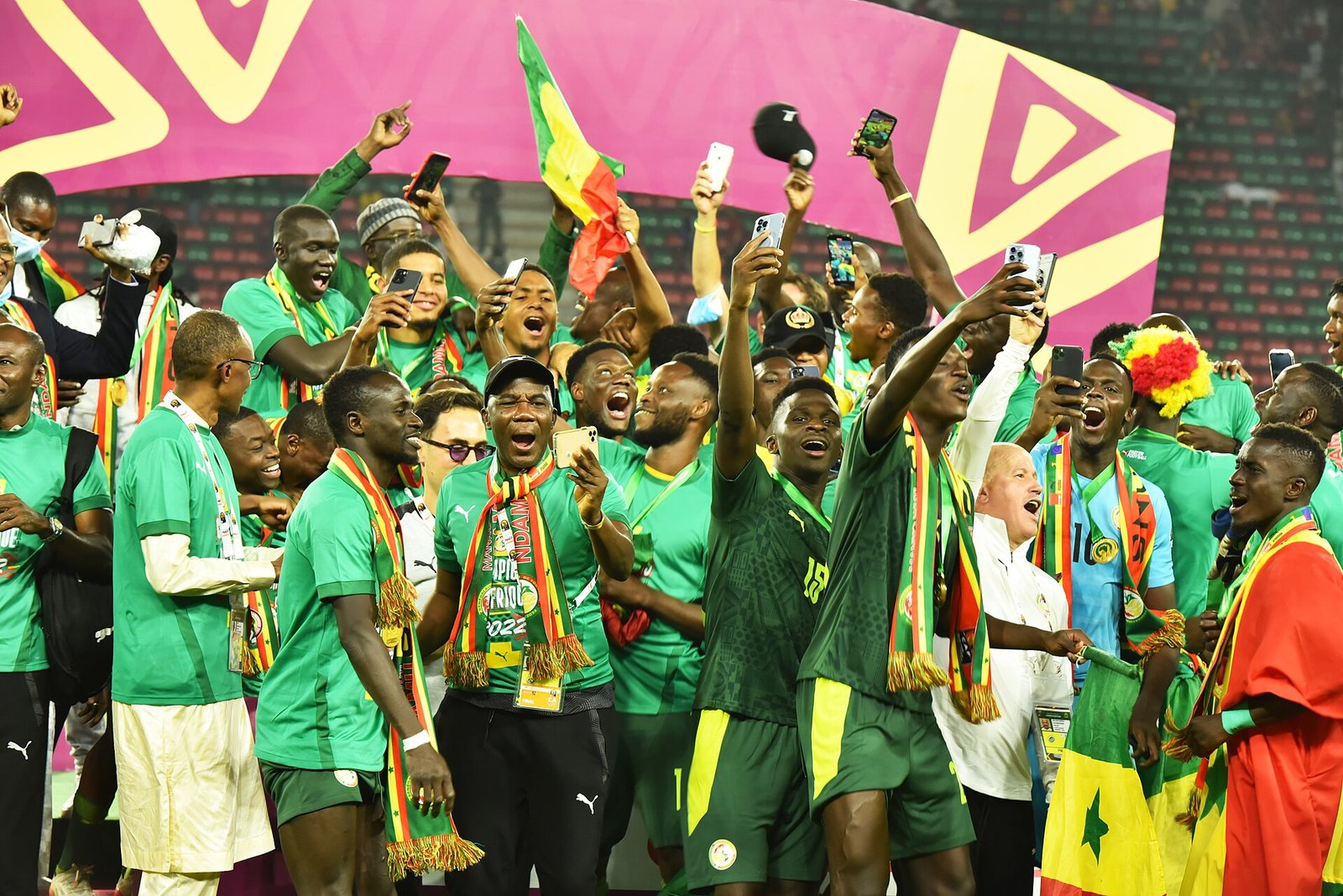
Senegal finally had their day in sport’s highest court on Thursday, as the Court of Arbitration for Sport (CAS) heard their bid to win back the Africa Cup of Nations title that was taken from them and handed to Morocco.
Main photo: Jeanpierrekepseu / Wikimedia Commons, CC BY-SA 4.0
The hearing in Lausanne, Switzerland, ran for more than five hours behind closed doors, almost ten months after the final in Rabat. CAS did not rule on the day, and gave mixed signals on timing. Director general Matthieu Reeb told Al Jazeera he expected a decision “not today, not tomorrow, but a few days later”, adding that the facts were clear and what remained were procedural and legal questions. AFP separately quoted him as saying the process could take “days or even weeks”.
How the title was lost
Senegal beat the hosts 1-0 after extra time in January, with Pape Gueye scoring the winner. But the closing stages of normal time descended into chaos when Morocco were awarded a late penalty and many Senegal players walked off the pitch in protest. Play resumed after a long stoppage, Brahim Díaz missed the spot-kick and Senegal went on to win.
Morocco challenged the result. In March, the Confederation of African Football (CAF) Appeal Board ruled that Senegal had broken the rule against leaving the field without the referee’s permission, overturned the result and awarded Morocco a 3-0 win and the trophy. Senegal lodged their appeal with CAS on 25 March, calling CAF’s decision the “most blatant administrative robbery in the history of our sport”.
What Senegal are arguing
Senegal’s football federation president, Abdoulaye Sow, said his delegation was confident and hoped sports law would be upheld “for the dignity and honour of Africa”. Morocco’s delegation did not speak to reporters.
The three-member panel is chaired by French sports law expert Gérald Simon, alongside Italian law professor Luigi Fumagalli and Ulrich Haas, a professor at the University of Zurich. Thibault Ulrich, a sports law researcher at the University of Lausanne, told AFP that CAF’s ruling was “extremely strict” and did not take account of referee Jean-Jacques Ndala’s decision to let the match continue. Football’s laws generally treat a referee’s on-field decision as final, and CAS rarely overturns one unless bad faith or corruption is shown.
Why it matters
This is about far more than one trophy. A ruling either way will set a marker for how African football’s governing body handles disputes, and how much weight a referee’s call carries when the stakes are highest. Senegal’s government has already called for an investigation into suspected corruption at CAF. For the background to the appeal, read Senegal take AFCON title fight to sport’s highest court.
Leave a Reply