
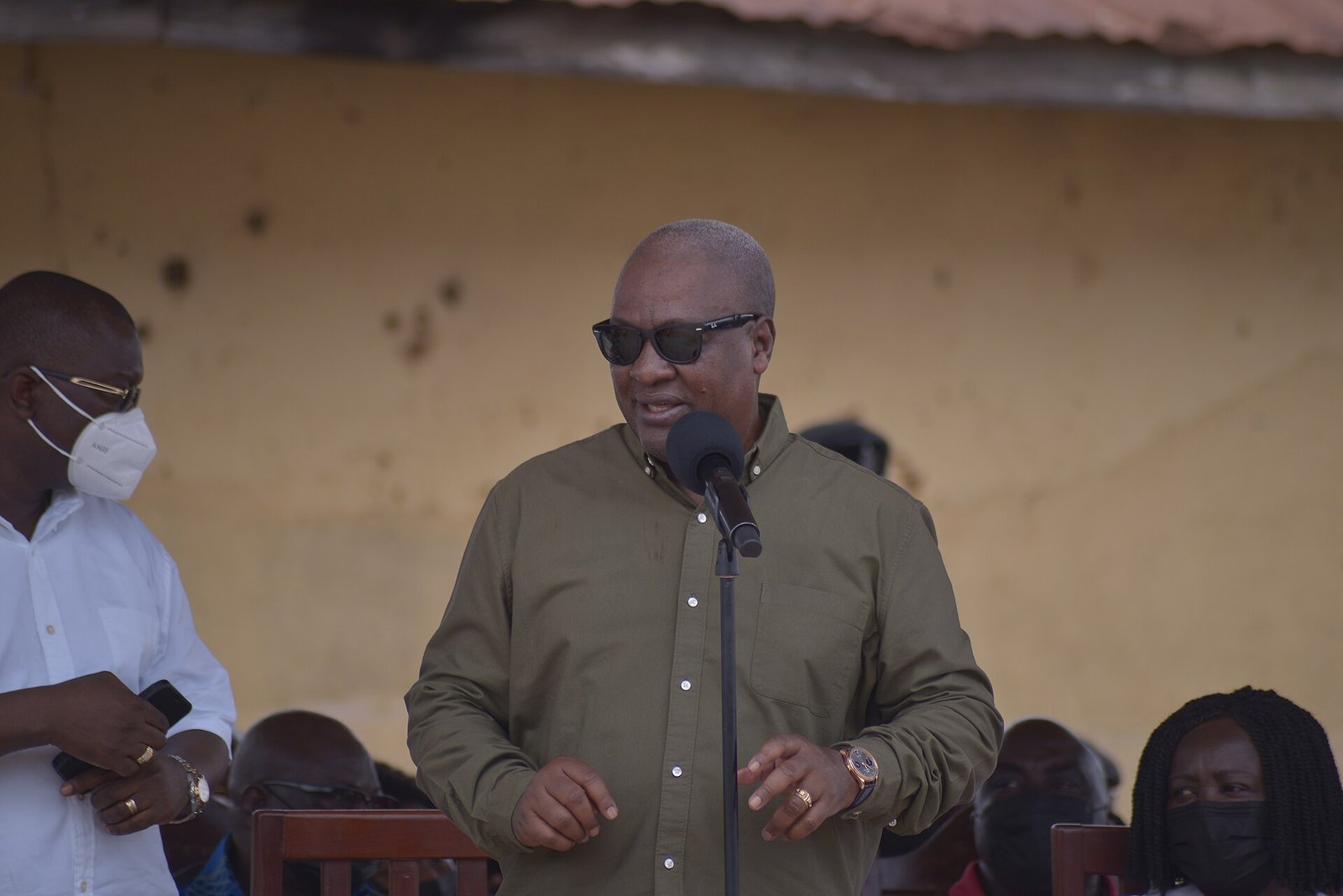
Ghana’s President John Dramani Mahama has declared that he is ready to carry the same risks Kwame Nkrumah carried in the fight for African unity, even if it costs him as dearly as it cost Ghana’s founding father.
Main photo: Amuzujoe / Wikimedia Commons, CC BY-SA 4.0
The president made the remarks while meeting members of the Ghanaian community in Moscow, in a video shared on Facebook on Friday, 30 October, according to GhanaWeb. His visit to Russia follows the recent Russia-Africa summit, where African leaders pressed for investment, industry and fairer global finance.
“I think he was referring to people like me”
Reflecting on Nkrumah’s legacy, Mahama said the first president’s vision of a united continent still speaks directly to today’s leaders. “I think he was referring to people like me,” he said. “I believe in him, and I believe in his vision and his philosophy of Pan-Africanism and African unity.”
He did not play down the danger. “It has its risks, as you said, and Nkrumah suffered it,” Mahama told his audience. Nkrumah, who led Ghana to independence in 1957 as the first sub-Saharan African colony to break free from colonial rule, was overthrown in a coup in 1966 and died in exile.
Mahama also pointed to Patrice Lumumba, the Congolese independence leader who was killed only months after becoming prime minister in 1960, as a reminder of the price paid by Africans who challenged powerful interests.
Speaking out, whoever is uncomfortable
The president said he would keep speaking boldly on African issues, even when his words make some people uncomfortable. It is one of his strongest statements yet on Pan-Africanism since returning to office in January 2025.
His trip to Russia has already carried a practical edge. Accra has opened discussions with the Russian state nuclear company on Ghana’s first nuclear power plant, part of a wider push by African governments to widen their partnerships beyond traditional Western allies.
Why it matters to Black readers worldwide
Nkrumah’s Pan-Africanism was never a project for Africa alone. He drew on the ideas of diaspora thinkers such as W.E.B. Du Bois and Marcus Garvey, and Du Bois himself settled and died in Accra. That link between the continent and its global family still shapes Ghana’s outreach to the diaspora today.
By invoking Nkrumah and Lumumba on foreign soil, Mahama is positioning himself as a leader willing to speak for a self-reliant Africa on the world stage. Supporters will see a president reclaiming a proud tradition. Critics are likely to ask whether bold words in Moscow will be matched by concrete gains for Ghanaians at home.
Either way, the message from Accra’s leader is clear: the dream of a united Africa is back at the centre of Ghana’s foreign policy, and he intends to say so loudly.