
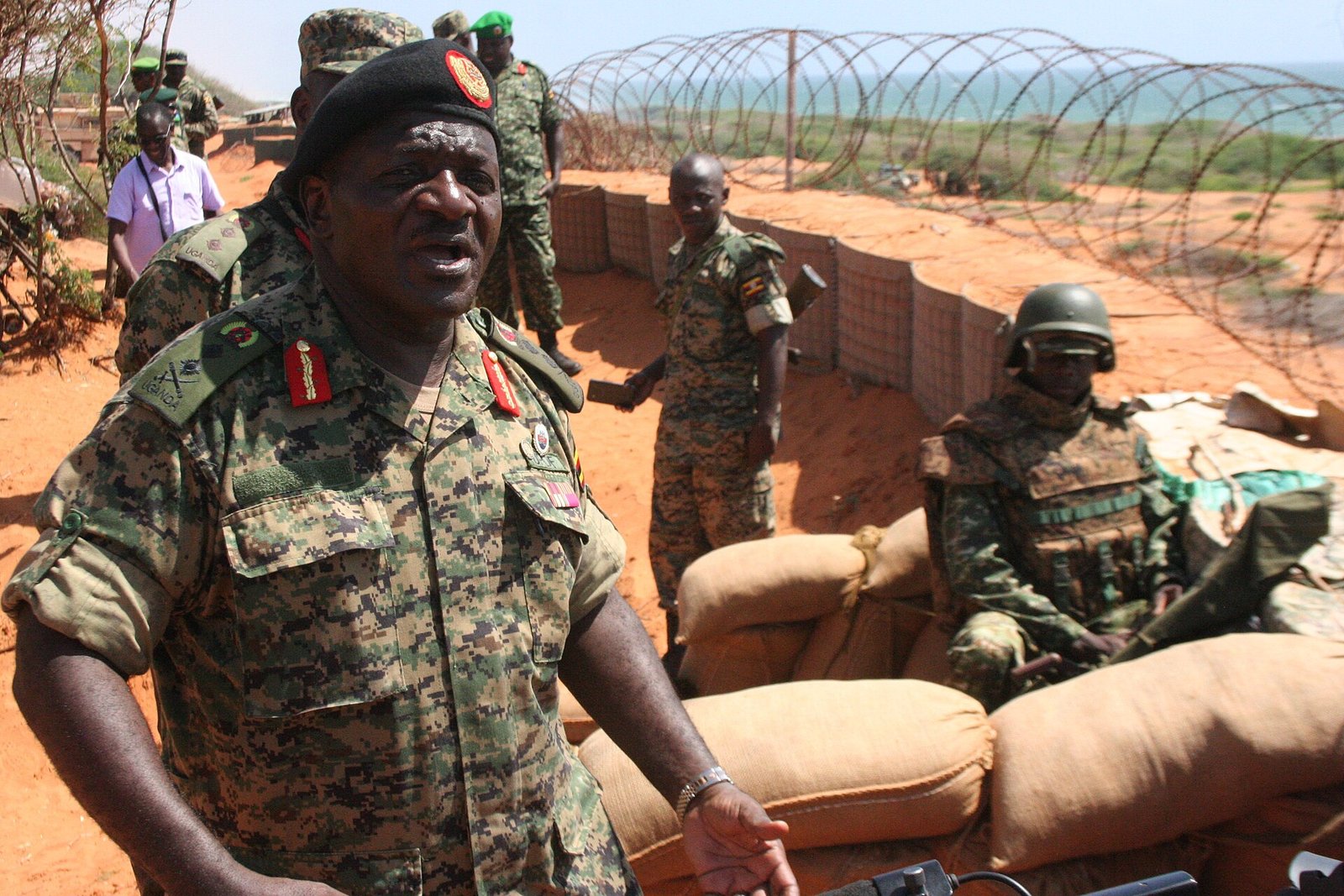
Uganda has begun bringing its soldiers home from Somalia, starting the end of one of the longest and most costly African-led peace operations on the continent.
Main photo: AMISOM Public Information / Wikimedia Commons, CC0
A first group of 109 soldiers from the Uganda People’s Defence Forces (UPDF) reportedly left Mogadishu on Friday, the BBC reported on Monday. The move follows an announcement last week by Uganda’s army chief, Gen Muhoozi Kainerugaba, that the pull-out had started.
“As we promised, we have started withdrawing UPDF from Somalia. After 20 years of a lot of blood and sacrifice, we are handing over security to our Somali brothers,” Gen Muhoozi wrote on X.
A phased exit, not a clean break
The withdrawal is being carried out in stages and is expected to be completed in August 2027, according to the BBC. Around 4,500 Ugandan troops are serving under the African Union mission, making Uganda its largest contributor.
Kampala is not leaving Somalia entirely. About 2,000 Ugandan soldiers deployed under a separate bilateral security arrangement with Mogadishu are set to remain.
Ugandan media have reported that the UPDF is preparing to hand over positions in the Lower Shabelle region, including Barawe, Bulo Marer, Qoryoley and Janaale. The army has not published a full timetable, and Uganda’s acting army spokesperson did not respond to a BBC request for comment.
Twenty years of African-led peacekeeping
Uganda was the first country to deploy under the African Union Mission in Somalia (AMISOM) in 2007, when it was sent to shield Somalia’s fragile transitional government from the al-Shabab insurgency. Ugandan troops went on to play a central role in pushing the al-Qaeda-linked group out of Mogadishu and other major towns, fighting alongside the Somali National Army.
The mission has changed names and shape over the years. AMISOM gave way to the African Union Transition Mission in Somalia (ATMIS), which in turn was replaced in 2025 by the African Union Support and Stabilisation Mission in Somalia (AUSSOM), tasked with preparing Somali forces to take full charge of their country’s security.
Money is the pressure point
The exit comes as AUSSOM faces serious doubts over funding, with plans to wind down US and UN support. A 12-month transition plan is due to start in January, giving Somalia and the African Union time to find other sources of money. Earlier this year Gen Muhoozi warned that Uganda would leave unless the mission’s financing was sorted out.
Al-Shabab has lost large areas of territory but remains able to strike Somali government forces and African Union positions, and analysts in the region have questioned whether Somali units are ready to fill the gap.
Why it matters
For two decades the Somalia mission has been the clearest test of the African Union’s promise of “African solutions to African problems”. Ugandan soldiers paid a heavy price to make that promise real. How the handover is managed, and who pays for what comes next, will shape whether African-led security missions remain viable at a time when outside partners are stepping back.