
Reports say Asian-owned shops are being shut under a new empowerment law. The minister in charge tells a different story.
Foreign-run shops are being closed in parts of Eswatini, and MPs have backed a 12-month window for traders who are breaking the rules to put things right or shut down. But the details emerging from Mbabane do not match the version spreading across the continent.
The closures follow an inspection drive by the Ministry of Commerce, Industry and Trade. Widely shared reports, including one by the BBC, link it to the Citizens Economic Empowerment Act, a 2023 law meant to give emaSwati, the kingdom’s citizens, a bigger stake in the economy.
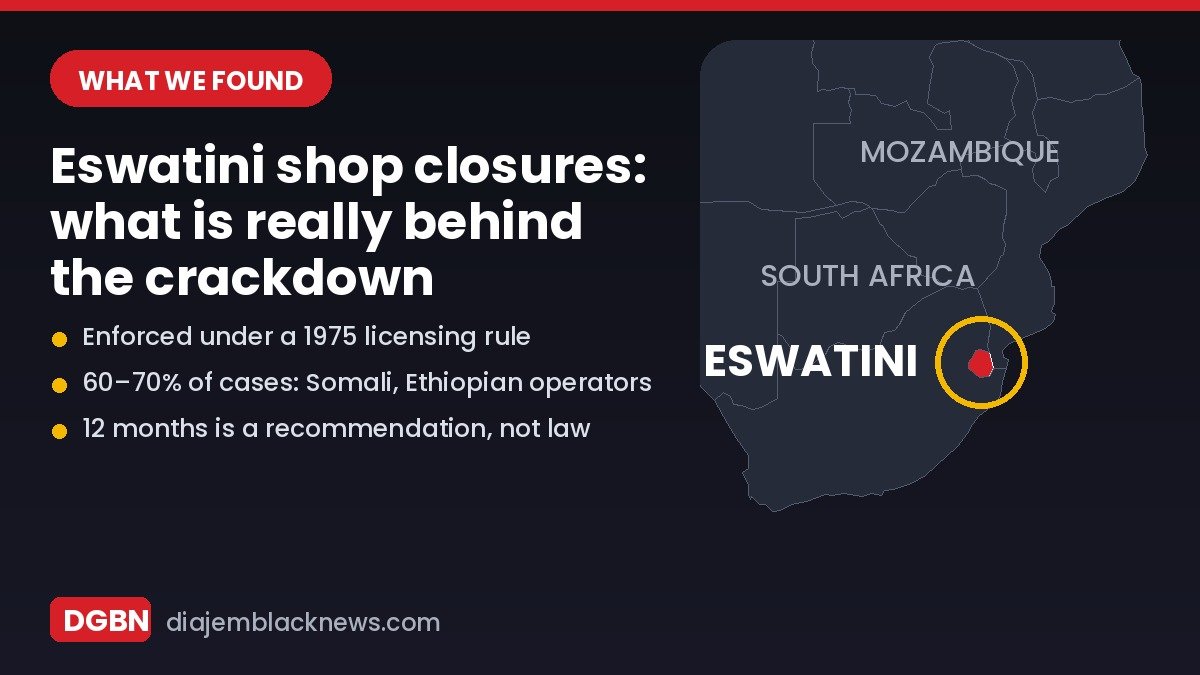
Commerce Minister Manqoba Khumalo says that is wrong. He told the Times of Eswatini the inspectors are enforcing the Trading Licences Order of 1975, which bars foreigners from trading on Swazi Nation Land, the communal land held in trust by the king. The empowerment Act cannot take effect until Parliament passes its regulations.
He also challenged the idea that Asian traders are the main group affected. Somali and Ethiopian operators account for 60 to 70 per cent of the non-compliant cases found so far, he said, either lacking papers to be in the country or the documents needed to run a business.
A divided Parliament
The issue reached the House of Assembly on Tuesday 10 November, during debate on the ministry’s quarterly report. Mbabane East MP Welcome Dlamini criticised the way shops were being shut, in some cases with stock still inside, and asked who would take them over. He argued for a three-year transition.
Others wanted speed. Hhohho regional MP Tanele Magagula said foreign-owned businesses in rural areas should be seized at once. Mafutseni MP Sabelo Mtetwa proposed six months, with finance for citizens to step in.
Lobamba Lomdzala MP Marwick Khumalo warned against discrimination and pointed out that many communities rely on these shops for bread and other basics. MPs settled on 12 months.
That figure is a recommendation, not law. It has no start date, and the minister says he will report to Cabinet before any transition period is fixed. The ministry insists nobody is being targeted by nationality and that valid licences will be honoured.
What comes next
The inspection exercise, staffed by close to 200 graduates on a three-month assignment, is due to end on 19 November. The government has not said how many shops have been closed or how many jobs are at risk.
The bigger change is still to come. Draft regulations under the empowerment Act would reserve all retail businesses turning over less than E8 million a year for citizens, and require at least 50.1 per cent citizen ownership in larger supermarkets, wholesalers and petrol stations.
It comes at a tense moment for the region. South Africa has seen raids, deadlines and deadly violence aimed at foreign traders this year. Eswatini, where about 70 per cent of people live below the poverty line, says its aim is compliance and opportunity, not expulsion.
Sources: Times of Eswatini, BBC, Africa Briefing.