
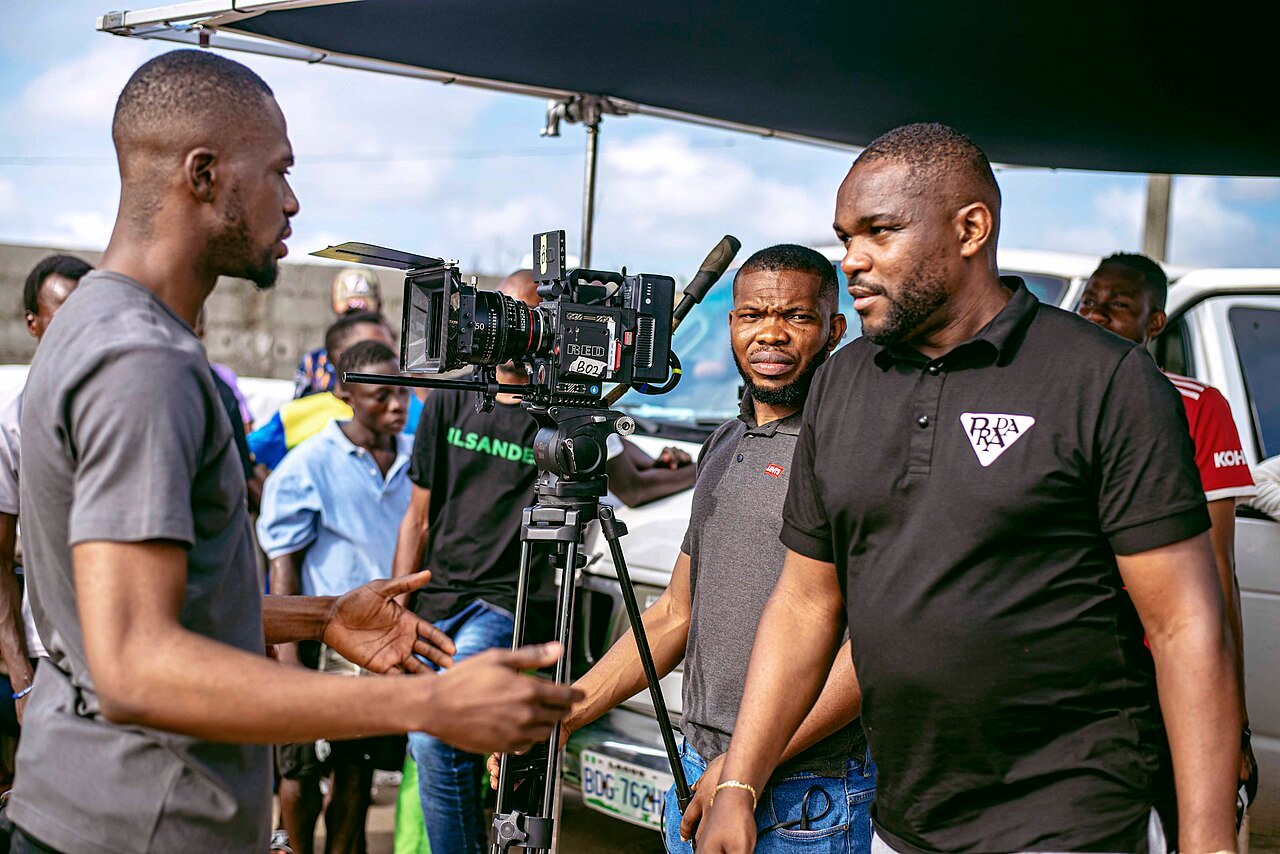
Photo: MediaMOF / Wikimedia Commons, CC BY-SA 4.0
Nigeria has renewed its ambition to create at least two million jobs in the creative economy by 2030, placing culture, entertainment and digital production at the centre of its economic diversification plans.
Target reiterated in Lagos
Arts, Culture, Tourism and Creative Economy Minister Hannatu Musa Musawa restated the goal during a ministerial roundtable at Creative Africa Nexus, or CANEX, WKND 2026 in Lagos.
DGBN has also reported on Sanwo-Olu walks the runway for Ugo Monye at Lagos Fashion Week.
She said the government wants the sector to become a stronger source of investment, trade and sustainable employment, rather than being treated solely as cultural expression. The target forms part of the administration’s Destination 2030 agenda.
The ministry has previously said the creative sector contributes about 2.3 per cent of Nigeria’s gross domestic product. It has also linked the jobs target to a broader plan to expand the economic contribution of creative industries and tourism.
Ownership and finance remain central challenges
Musawa said progress depends on policy reforms, access to capital, improved infrastructure and more robust protection for intellectual property. Those issues are critical for musicians, filmmakers, designers, writers, fashion entrepreneurs and digital creators whose work can be copied, distributed or monetised without fair returns.
For more context, read DGBN’s coverage of Elevate Africa calls for African creators to own more of the value they generate.
At the Lagos discussions, participants from African and Caribbean countries called for stronger funding mechanisms, market access and cross-border partnerships. The roundtable focused on how cultural and creative industries can move from broad commitments to practical implementation as artificial intelligence reshapes production and distribution.
Nigeria has already published a Creative Economy Data Mapping Report, intended to identify value chains, investment opportunities and infrastructure gaps across sectors including film, music, fashion, design, digital content and tourism.
Why the pledge matters
For Nigeria’s young population, the creative-economy jobs target is significant because it recognises talents often developed outside formal employment as businesses capable of generating income, exports and local value.
But the number is a policy objective, not a measure of jobs already secured. Delivering it will require transparent reporting on new employment, affordable finance for small creative businesses, dependable digital and physical infrastructure, and practical enforcement of copyright and other intellectual-property rights.
The policy also has implications beyond Lagos and Abuja. Nigeria’s creative wealth includes Kannywood, traditional crafts, regional fashion, publishing and music scenes across the country. Ensuring that investment reaches those communities will determine whether the promised gains are widely shared.
Related DGBN reporting includes Nigeria and Germany renew push for investment, food security and jobs.
For Black audiences across Africa and the diaspora, Nigeria’s plan underscores the global economic value of African cultural production. The central test will be whether creators retain ownership and receive a meaningful share of the income generated by their work.