
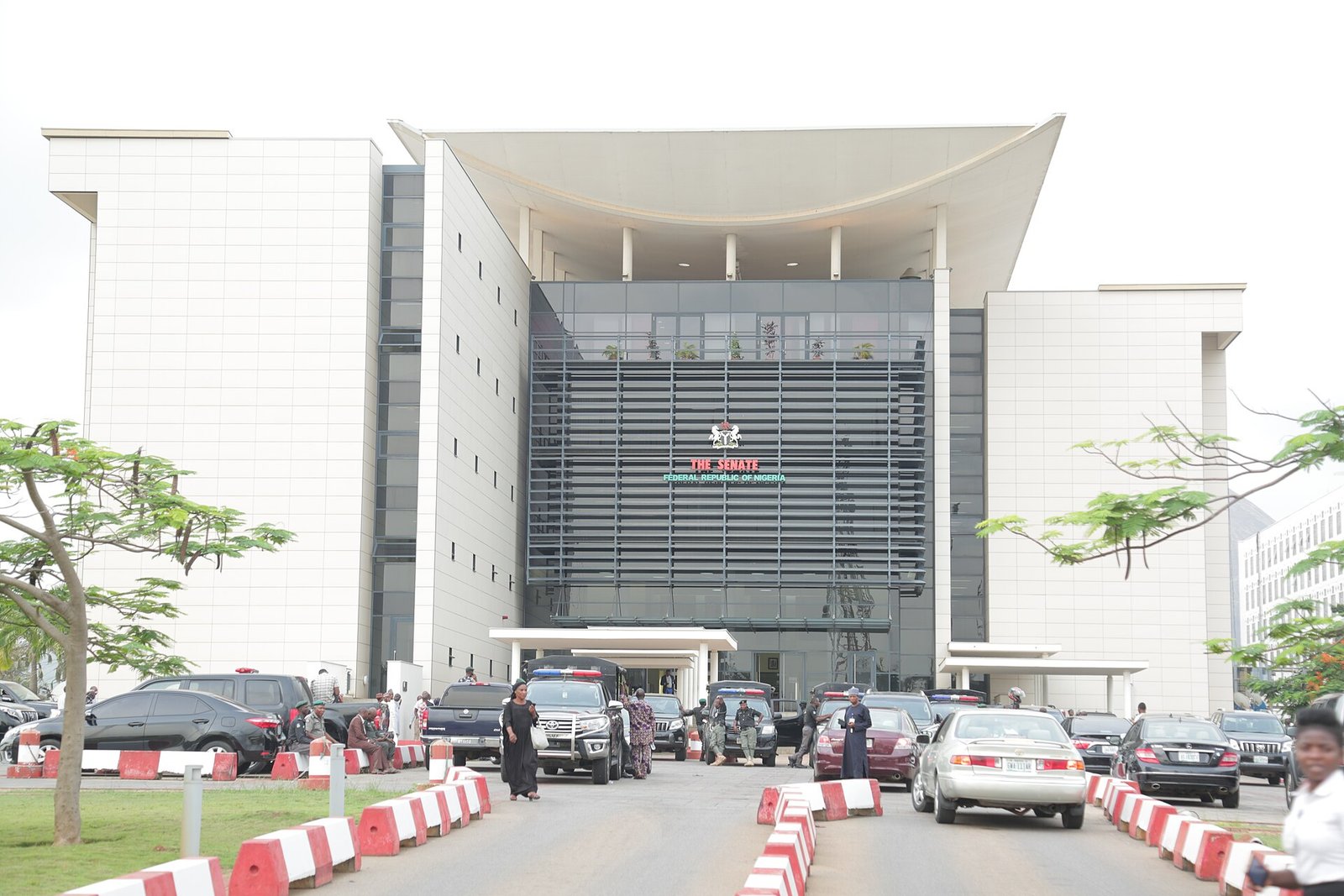
Photo: Kabusa16 / Wikimedia Commons, CC BY-SA 4.0
President Bola Tinubu has asked Nigeria’s National Assembly to approve a supplementary external borrowing plan worth $20.52 billion and €1.05 billion for projects scheduled across 2026 and 2027.
Request sent to Senate
The request was read in the Senate on Tuesday by Senate President Godswill Akpabio, according to multiple Nigerian news outlets.
DGBN has also reported on Senators Declare Nigeria’s Senate Presidency “Not Vacant”, Back Akpabio for 2027.
Tinubu said the proposed borrowing would fund projects in power, transport, agriculture, healthcare, education, water supply, security and employment creation. He argued that the scale of Nigeria’s infrastructure gap requires funding beyond the government’s available domestic resources.
The President said the listed programmes had undergone technical and economic assessments and were selected for their expected contribution to jobs, skills development, entrepreneurship, poverty reduction and food security.
Most of the projects are expected to extend across Nigeria’s 36 states and the Federal Capital Territory, Abuja.
Parliamentary review ahead
The Senate referred the request to its committees on Local and Foreign Debts and Appropriations for examination, with a report expected within a week.

For more context, read DGBN’s coverage of Tinubu Launches 2027 Campaign Council, Tells APC Chiefs: Deliver Your Polling Units.
The referral means the request is not yet an approved loan package. Legislators will be expected to assess the specific projects, lenders, repayment terms, costs and implications for public finances before deciding whether to grant approval.
Reports differed slightly on the euro figure in early coverage, with some outlets citing €1.04 billion and others €1.05 billion. Premium Times reported the precise sum as €1,045,083,643, alongside $20,517,755,901.
Why the proposal matters
The scale of the request puts renewed focus on how Nigeria finances development while managing pressure on public revenue. Foreign-currency loans can provide large sums for essential projects, but they also expose the country to exchange-rate risks: a weaker naira can increase the local-currency cost of repayments denominated in dollars and euros.
For Nigerians, particularly communities facing unreliable electricity, weak transport links, unemployment and under-resourced public services, the central question will be whether the funds translate into visible, properly delivered projects.
It also raises the importance of public transparency. Detailed disclosure of loan conditions, project locations, procurement and delivery timelines will be vital if the borrowing is approved.
Related DGBN reporting includes Labour gives Tinubu government two weeks to cut petrol prices as 30-day NNPC discount draws scepticism.
The request follows other recent borrowing approvals sought by the administration, including a $6 billion external financing plan approved earlier this year for budget support and port rehabilitation. The latest proposal is substantially larger and will face close scrutiny over debt sustainability and the government’s capacity to generate sufficient revenue for repayment.