
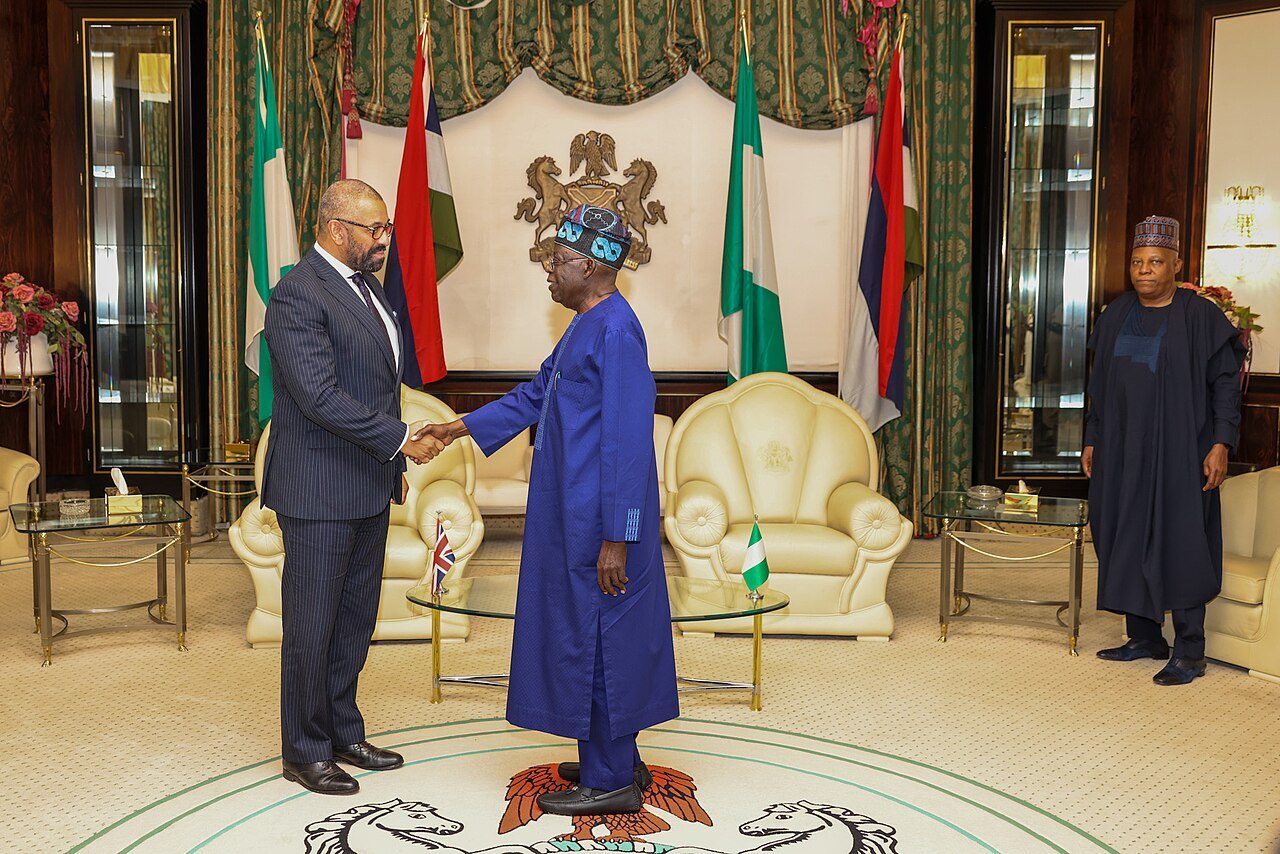
Main photo: UK Government / Wikimedia Commons, CC BY 2.0
President Bola Tinubu has defended his government’s economic reforms, saying Nigeria could not postpone difficult choices if it was to escape long-running fiscal and foreign-exchange pressures.
Independence Day defence
In a nationwide address marking Nigeria’s 66th Independence Day on 1 October, Tinubu said his administration inherited an economy weakened by rising poverty, an expensive petrol subsidy regime and distortions in the foreign-exchange market.
DGBN has also reported on Nigeria declares 1 October public holiday for 66th Independence anniversary.
He argued that ending the petrol subsidy and pursuing exchange-rate reforms were difficult but unavoidable measures intended to put Africa’s largest economy on a more sustainable path. Tinubu said successive governments had delayed decisions that allowed the underlying problems to deepen.
The President said the government was redirecting fiscal space created by the reforms towards infrastructure, security, health, education and agriculture. He also urged Nigerians to remain patient as his administration seeks to turn macroeconomic stability into broader prosperity.
The cost to households
For many Nigerians, the reforms have carried an immediate and heavy price. The removal of the petrol subsidy in 2023 drove up transport and energy costs, while currency reforms contributed to higher prices for imported goods and inputs.
For more context, read DGBN’s coverage of Africa: Xenophobic Attacks – Enough Is Enough, Tinubu Tells AU.
The International Monetary Fund has recognised improvements in Nigeria’s macroeconomic resilience, including stronger external buffers and better functioning foreign-exchange markets. But it has also warned that living conditions remain difficult, with poverty and food insecurity still severe.
In its June 2026 assessment, the IMF said poverty had reached 63 per cent under the national poverty line and estimated that 27 million people experienced food insecurity in late 2025. It called for social spending and targeted cash support to be protected while reforms continue.
A test of delivery
Tinubu’s argument is that Nigeria must endure short-term pain to restore economic credibility and finance long-neglected public services. Yet improved headline indicators will not settle public concern unless citizens see clear gains in food affordability, jobs, reliable electricity, transport and incomes.
That is why the speech matters across Nigeria and the wider African diaspora. Nigeria’s economic direction shapes the prospects of millions at home, affects regional trade and migration, and influences confidence in one of the continent’s most consequential markets.
Related DGBN reporting includes Africa: Xenophobia – Tinubu Reports South Africa to AU, Demands Action.
The political challenge for Tinubu is now as clear as the economic one: show that reform savings are transparent, fairly deployed and capable of easing the pressure on ordinary families. Without that visible return, public consent for further difficult measures will remain fragile.