
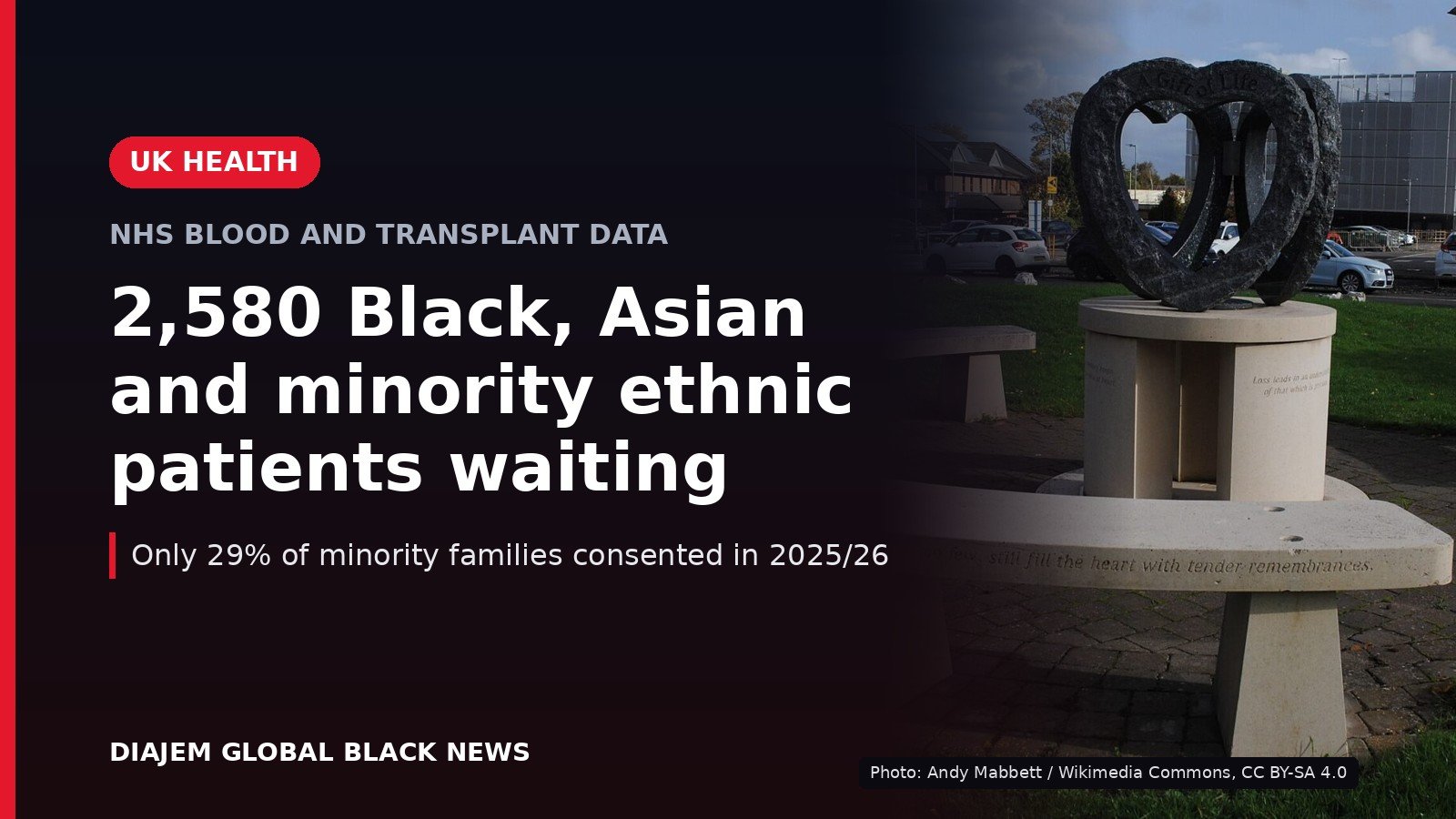
A record number of Black, Asian and minority ethnic patients are waiting for a life-saving organ transplant in the UK, and the gap between the people who need organs and those who donate them is widening.
Main image: DGBN graphic. Photo: Andy Mabbett / Wikimedia Commons, CC BY-SA 4.0
NHS Blood and Transplant’s latest report on ethnic differences in organ donation, covering 2025/26, shows 2,580 patients from these communities were on the active waiting list in March 2026, out of more than 8,200 people of all backgrounds.
The numbers behind the gap
Black, Asian and minority ethnic patients made up about a third of everyone on the transplant list last year. Yet they received only around a quarter of transplants and accounted for just 10% of organ donors.
Last year 100 deceased donors and 135 living donors came from these communities. Over the same period, 29 Black patients and 67 Asian patients died while waiting for a suitable organ, according to the figures reported by The Voice.
Perhaps most worrying is the fall in family consent. In 2025/26, 29% of ethnic minority families agreed to organ donation when asked, down from almost 38% a decade ago.
Why matching matters
Organs are matched on blood group and tissue type, and the closest matches are more likely to come from someone of a similar ethnic background. Certain blood groups, such as B, are more common among Black and South Asian people. When too few donors come from these communities, patients from the same backgrounds wait longer, and some never receive the call.
Registrations on the NHS Organ Donor Register from minority communities have risen over the past five years, but every group remains under-represented. People from these backgrounds make up 12.7% of opt-in registrations, compared with 18% of the population of England and Wales.
Trust, faith and family conversations
NHS Blood and Transplant says the biggest barriers are uncertainty, a lack of information, concerns about religious or cultural beliefs, and mistrust of the NHS. When families decline, the most common reasons are faith concerns or not knowing what their loved one would have wanted.
Rommel Ravanan, the service’s chief medical officer, urged people to record their decision on the register and to talk to those closest to them, so families are not left facing an agonising choice without guidance. He said families, faith groups and community organisations had a vital role in helping people make informed choices and in reducing inequalities in transplantation.
Why it matters
For Britain’s Black communities, the figures are a stark reminder that health inequalities do not end at the hospital door. Mistrust of the NHS has deep roots, but the cost of silence is measured in lives. A single conversation at the dinner table, or a few minutes on the NHS Organ Donor Register, can decide whether a Black patient waiting for a kidney gets one in time.