
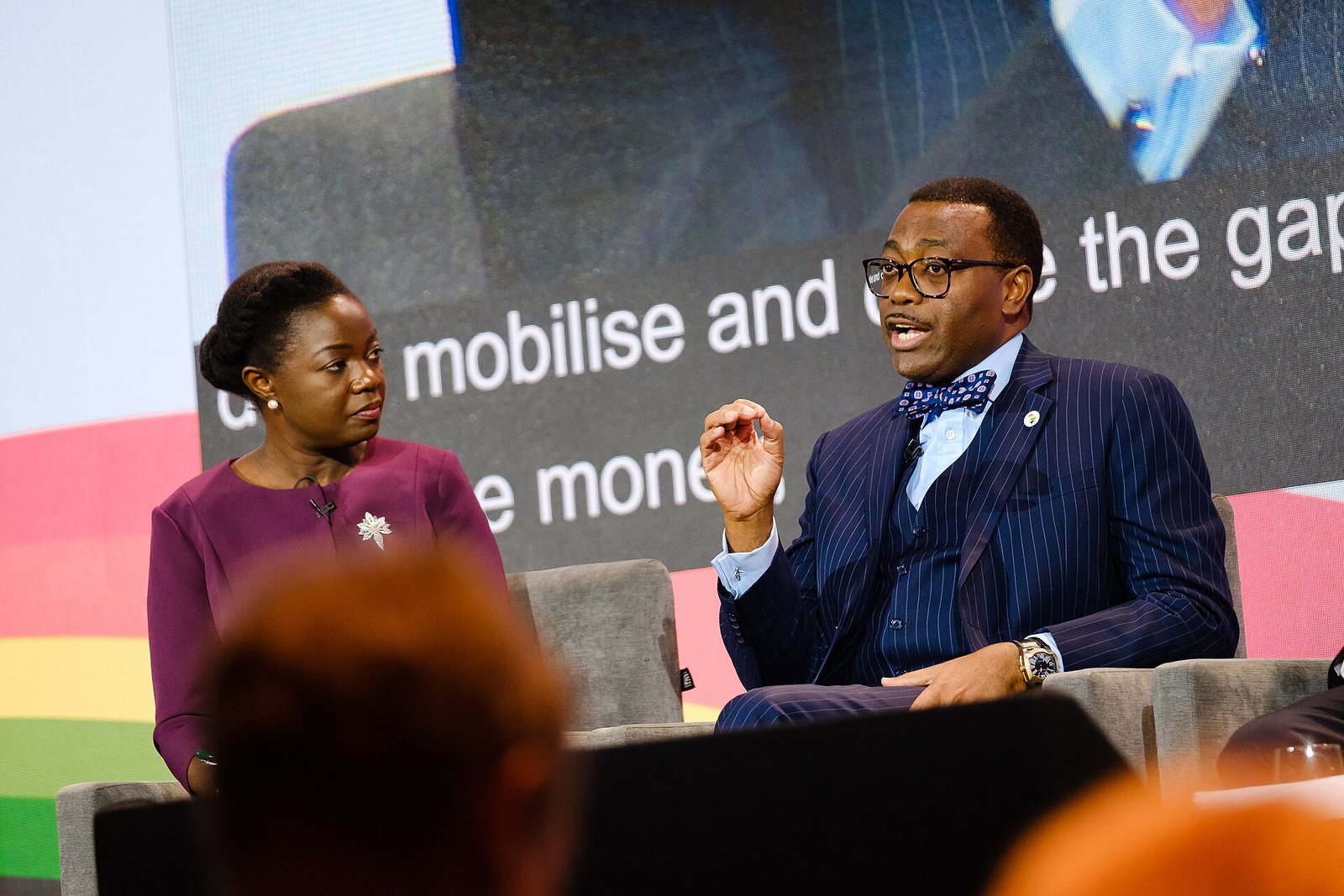
Akinwumi Adesina, the Nigerian who led the African Development Bank for a decade, has told President Bola Tinubu he is ready to serve his country in any capacity, while insisting he is not hunting for a government job.
Main photo: DFID / Graham Carlow / Wikimedia Commons, CC BY 2.0
The former AfDB president made the pledge on Tuesday after a meeting at the Presidential Villa in Abuja, where he briefed Mr Tinubu on his ten years at the helm of the continent’s biggest development lender.
Speaking to journalists afterwards, Mr Adesina said his “heart is always at home” and that he felt a duty and a responsibility to help Nigeria. He was equally clear that he had not come asking for anything. “I’m not looking for a job,” he said, according to Premium Times.
No appointment or specific role was announced after the meeting.
$7bn for Nigeria in ten years
Mr Adesina told the president that the AfDB committed about $7 billion to Nigeria between 2015 and 2025. He set that against the roughly $11.1 billion the bank had provided to the country in total since it began operating there in 1971, saying his tenure accounted for around 63 per cent of that figure.
He also used the visit to praise the Tinubu administration’s economic reforms, singling out the removal of the petrol subsidy and the unification of Nigeria’s foreign exchange windows. He described the measures as tough but said they were starting to bear fruit, pointing to better dollar liquidity, the return of portfolio investors, easing inflation and improved outlooks from some rating agencies.
He acknowledged, however, that prices remain high for ordinary Nigerians, many of whom are still feeling the squeeze from higher fuel and food costs that followed the reforms. Critics of the government argue that the pain of the changes has fallen hardest on households. DGBN recently reported on the president’s request for lawmakers to approve a $20.5bn and €1.05bn borrowing plan.
From farm reforms to the continental stage
An agricultural economist, Mr Adesina served as Nigeria’s minister of agriculture and rural development from 2011 to 2015 under President Goodluck Jonathan. His best-known reform at home was an electronic wallet system that sent subsidised seed and fertiliser support to farmers through their mobile phones, cutting out middlemen. The AfDB has said the scheme reached 15 million farmers in its first four years.
In 2015 he became the first Nigerian elected to lead the AfDB, and he won a second five-year term in 2020. His presidency focused on electricity access, food security, industrialisation and regional integration, and oversaw a shareholder-backed increase in the bank’s general capital from $93 billion to $208 billion in 2019, the largest in its history at the time. His tenure ended in 2025.
Why it matters
Mr Adesina is one of Africa’s most recognised development voices, and few Nigerians have his mix of domestic policy experience and global financial networks. His public offer of support, made at a time when Abuja is seeking investment and fresh borrowing to fund its reform drive, will fuel speculation about a future role, even if he insists he is asking for nothing.
For Africans at home and in the diaspora watching how the continent finances its own development, his next move is worth following. DGBN has also covered calls for global lenders to back African-led bond markets.