
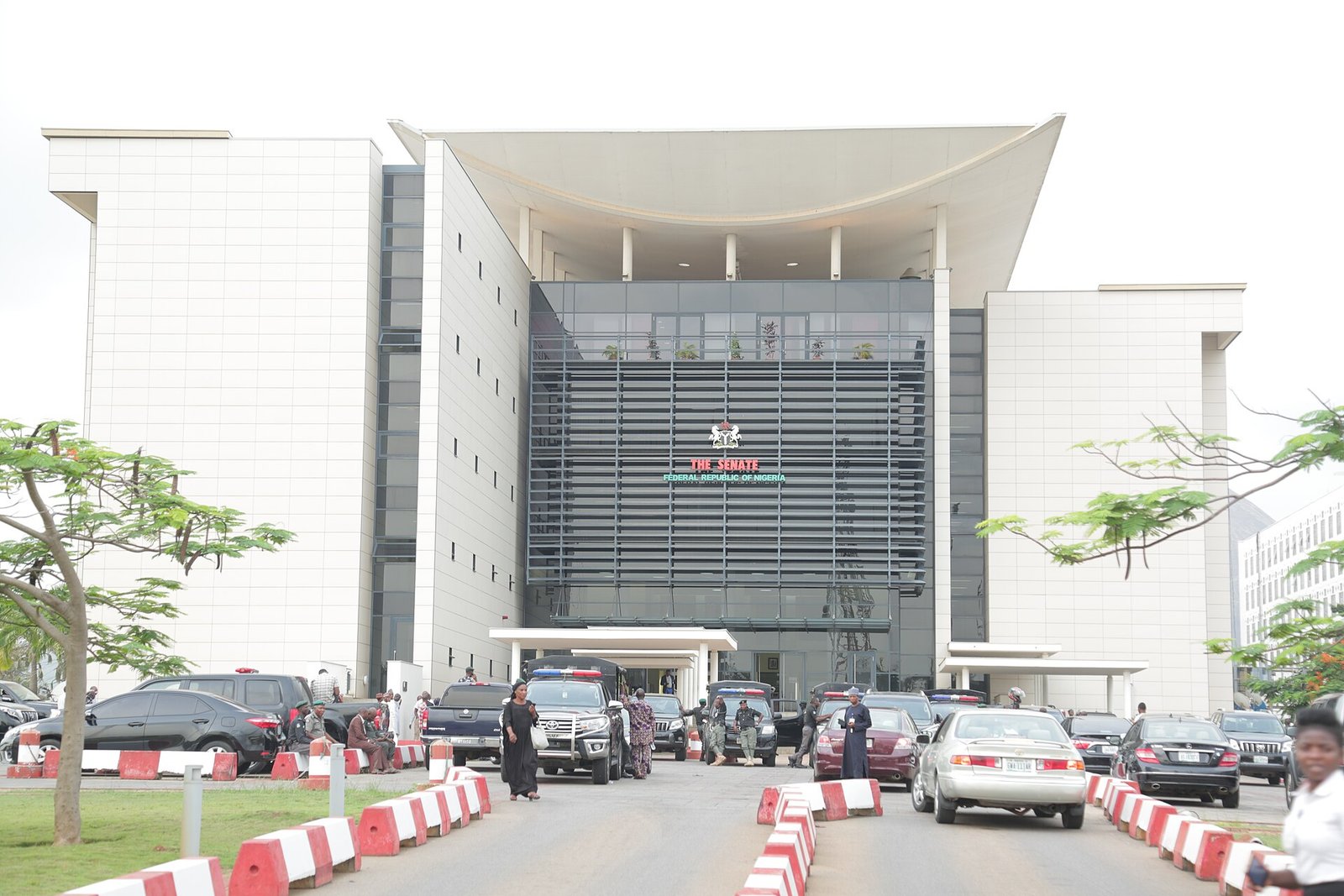
Photo: Kabusa16 / Wikimedia Commons, CC BY-SA 4.0
President Bola Tinubu has asked Nigeria’s National Assembly to approve a 2026–2027 supplementary external borrowing plan worth $20.52 billion and €1.05 billion, a package equivalent to roughly $21.7 billion at current conversion rates.
Request goes to Senate committee
The request was read in the Senate on Tuesday, 27 October, and referred to the Committee on Local and Foreign Debts, working with the Appropriations and Finance committees, for scrutiny.
DGBN has also reported on Adesina tells Tinubu he is ready to serve Nigeria “in any capacity”.
Tinubu said the proposed financing is intended to address an infrastructure funding gap and support programmes in power, transport, agriculture, healthcare, education, water supply, security, job creation and financial-management reform.
The president said the projects had been assessed for their expected economic and social contribution, and argued that external finance was needed to deliver investments across Nigeria’s 36 states and the Federal Capital Territory.
However, the request is not an approval to borrow. Lawmakers must still examine and authorise the plan before the government can proceed.
Debt questions remain central
The scale of the proposal has put Nigeria’s debt position back at the centre of public debate. The Debt Management Office puts total public debt at ₦166.79 trillion as of 30 June 2026. The Finance Ministry’s dashboard places the debt-to-GDP ratio at 35.5 per cent in the second quarter of the year.
For more context, read DGBN’s coverage of Tinubu seeks parliamentary approval for $20.5bn and €1.05bn borrowing plan.
Those figures do not automatically determine whether a country can or cannot borrow. The critical questions are the interest rates, repayment periods, currencies, lenders, grace periods and the economic returns produced by the projects.
That detail has not yet been publicly set out in full in the request reported from the Senate. It leaves parliament with a key responsibility: to establish whether the facilities are concessional development loans or more expensive commercial debt, and whether each project has a credible path to delivering public value.
Foreign-currency borrowing also creates exchange-rate exposure. If the naira weakens against the dollar or euro, the naira amount required for repayments increases even where the foreign-currency obligation does not change.
Why it matters
For Nigerians, the test is whether borrowed money translates into dependable electricity, safer transport, better water systems, healthcare, schools and jobs — rather than adding to obligations that restrict future spending on essential services.
Nigeria needs major investment to close long-standing infrastructure gaps, but borrowing without transparent terms, rigorous project selection and public oversight can shift costs to citizens for decades. The Senate review is therefore more than a procedural step: it is the point at which lawmakers can demand a full account of loan terms, disbursement plans, procurement safeguards and measurable outcomes.
Related DGBN reporting includes Senators Declare Nigeria’s Senate Presidency “Not Vacant”, Back Akpabio for 2027.
The government maintains that the financing will accelerate growth, reduce poverty and strengthen food security. The eventual decision should rest on whether those promised benefits are demonstrably greater than the long-term repayment burden.