

# Article Body
Population density may represent one of the most overlooked variables in understanding Africa's development trajectory and present-day economic challenges, according to emerging analysis of the continent's growth patterns. While scholars and policymakers have traditionally attributed Africa's slower economic progress to governance failures, systemic corruption, and the destabilizing effects of colonial-era boundaries, the spatial distribution of people across the continent offers critical insights that have been largely absent from mainstream development discussions.
The conventional wisdom regarding Africa's development obstacles has centered on institutional weaknesses and political dysfunction. Weak governance structures, pervasive corruption, ethnic tensions exacerbated by arbitrary borders drawn during the colonial period, and ongoing conflict have all received substantial attention from researchers and international development organizations. These factors undoubtedly play significant roles in shaping economic outcomes. However, by focusing primarily on these familiar explanations, analysts may have overlooked a more fundamental geographic and demographic dimension that influences everything from infrastructure investment to agricultural productivity to industrial development.
Population density fundamentally shapes how societies organize themselves and build the systems necessary for economic advancement. Regions with higher concentrations of people tend to develop more sophisticated transportation networks, communication systems, and service sectors out of practical necessity. Dense populations create the demand and economic justification for infrastructure investments that can then catalyze broader development. Additionally, density influences the feasibility of certain industries and economic activities, from manufacturing to services, as well as how efficiently resources can be distributed and how markets can form and function.
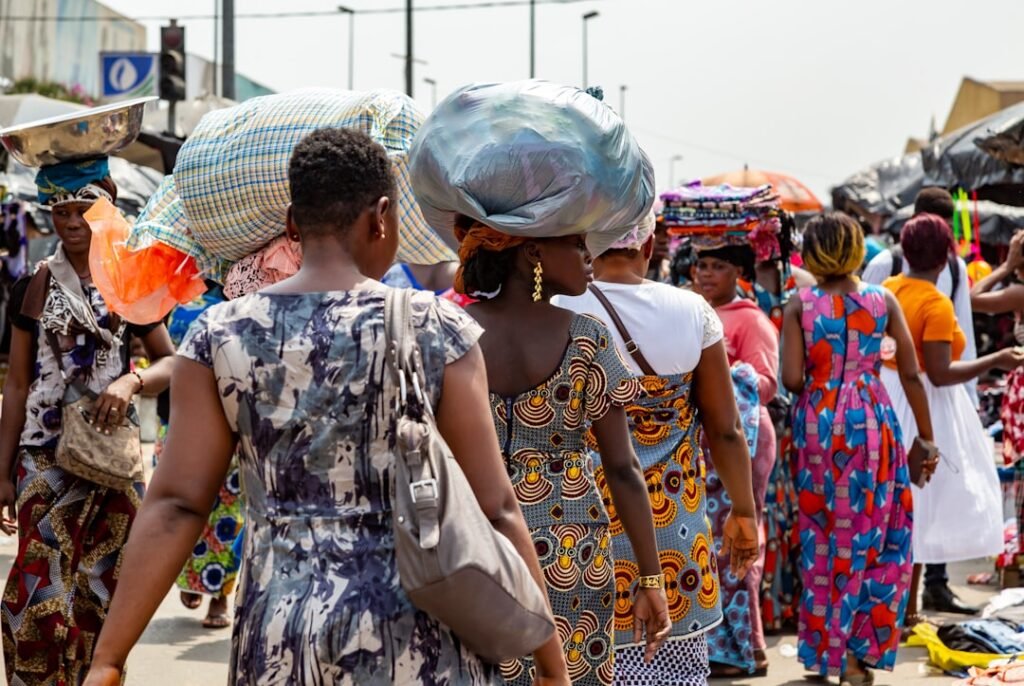
Africa's relatively dispersed population distribution, when considered across the continent's vast territory, presents distinct development challenges that differ from those faced by regions with higher population density. Understanding this geographic reality reshapes how observers should evaluate Africa's economic performance and future potential. Rather than viewing lower development indicators as purely the result of policy failures or institutional deficiencies, the density factor suggests that infrastructure gaps and economic constraints may reflect rational responses to geographic realities. This perspective does not excuse governance problems but rather contextualizes them within a fuller picture of development dynamics.
The recognition of population density as a missing analytical variable carries important implications for how Africa's future prospects should be evaluated. The current moment presents particular significance for the continent, as demographic trends and economic trajectories create opportunities that merit reassessment of conventional development narratives. As African nations continue to urbanize and population centers grow denser, the conditions that have historically constrained development may be shifting. Increased density in key urban areas could create the conditions necessary for infrastructure investment and economic clustering that could accelerate growth and institutional development.
This reframing does not suggest that governance, corruption, or conflict are unimportant—these remain serious obstacles that demand attention and reform. Rather, it argues that a more complete understanding of Africa's development challenges requires incorporating geographic and demographic variables into the analysis. Policymakers and development practitioners who account for population density alongside institutional factors may develop more effective strategies for promoting growth and stability.
Africa stands at a pivotal juncture where demographic changes intersect with renewed economic attention and investment flows. By moving beyond the familiar explanations for development gaps and incorporating spatial and demographic analysis into discussions about the continent's future, stakeholders can develop more nuanced and potentially more effective approaches to supporting sustainable growth. The moment for this analytical reorientation is now, as decisions made today will shape how African societies leverage their demographic and geographic assets in coming decades.
Source: AllAfrica News: Africa | Published: Sat, 22 Aug 2026 15:00:44
Leave a Reply