
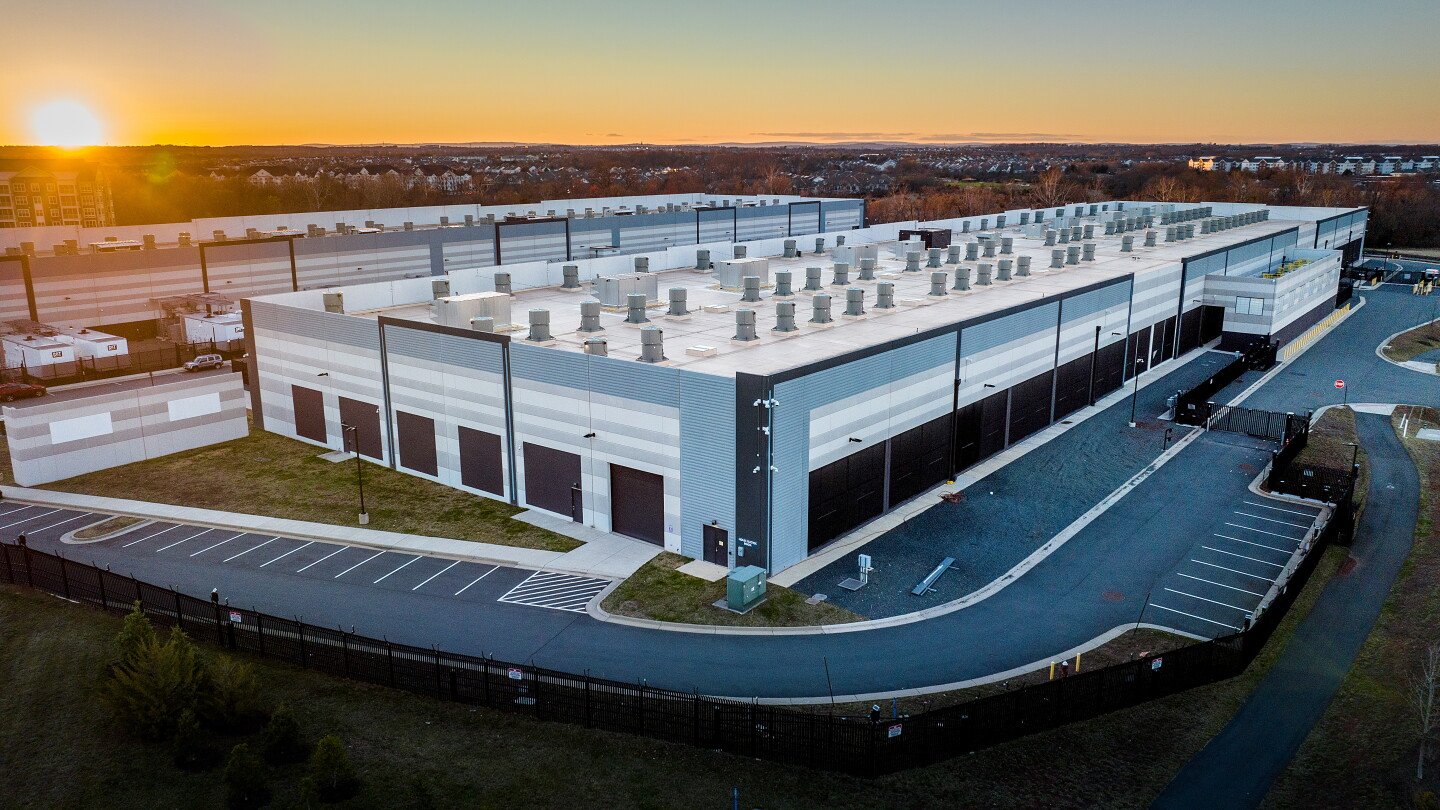
Amazon says it will invest more than $1 billion over five years in communities hosting its US data centres, as the rapid expansion of artificial-intelligence infrastructure increases scrutiny of the costs and benefits surrounding large computing projects.

The programme, called Built Together, is aimed at education, workforce training, energy affordability, water conservation and locally chosen community priorities.
Amazon says it wants to connect more than 300,000 students in data-centre communities with free community-college access and train up to 100,000 learners a year for skilled jobs by the end of 2028.
Data centres are becoming community infrastructure issues
The announcement comes as data-centre development accelerates to support cloud computing and AI workloads. These facilities require substantial electricity, fibre connectivity, land, cooling systems and construction investment.
In the United States, communities and regulators are increasingly asking who pays for grid upgrades, how much water facilities consume, what jobs are created locally and whether households face higher utility costs.
Amazon says its programme is intended to address some of those concerns by directing funding toward communities where its facilities operate.
The scale of the broader infrastructure challenge is visible elsewhere too. DGBN’s coverage of Angola Cables’ 800G network upgrade showed that AI infrastructure depends on international fibre as much as it depends on servers.
What should African host communities expect?
The US programme creates a useful benchmark for African governments and communities competing to attract data-centre and cloud investment.
A large data-centre project can bring construction work, technical employment, supplier contracts and new connectivity. But it can also place pressure on electricity systems, water resources and land.
That means negotiations should go beyond tax incentives and headline investment figures. Governments can ask what the developer will contribute to grid capacity, local training, university partnerships, community infrastructure and long-term employment.
DGBN has also reported on the planned Caribbean Gateway submarine cable, another example of the physical infrastructure required to support cloud and digital economies.
The AI boom is changing the economics of infrastructure
AI workloads are increasing demand for high-performance computing facilities and the power systems needed to run them. That has pushed technology companies into closer relationships with utilities, construction firms, chipmakers and local governments.
It also means data-centre policy is becoming part of economic-development policy.
For African markets, the opportunity is not simply to host rows of servers. The larger goal is to connect infrastructure investment with skills, local businesses, research capacity and affordable digital services.
That is particularly important as AI systems themselves become more capable. DGBN’s recent report on OpenAI’s persistent Dots agents illustrates how new software services can drive additional demand for cloud capacity.
Amazon’s $1 billion community commitment therefore matters beyond the United States. It provides another reference point for what governments and communities can ask for when large AI and cloud facilities are built in their regions.