
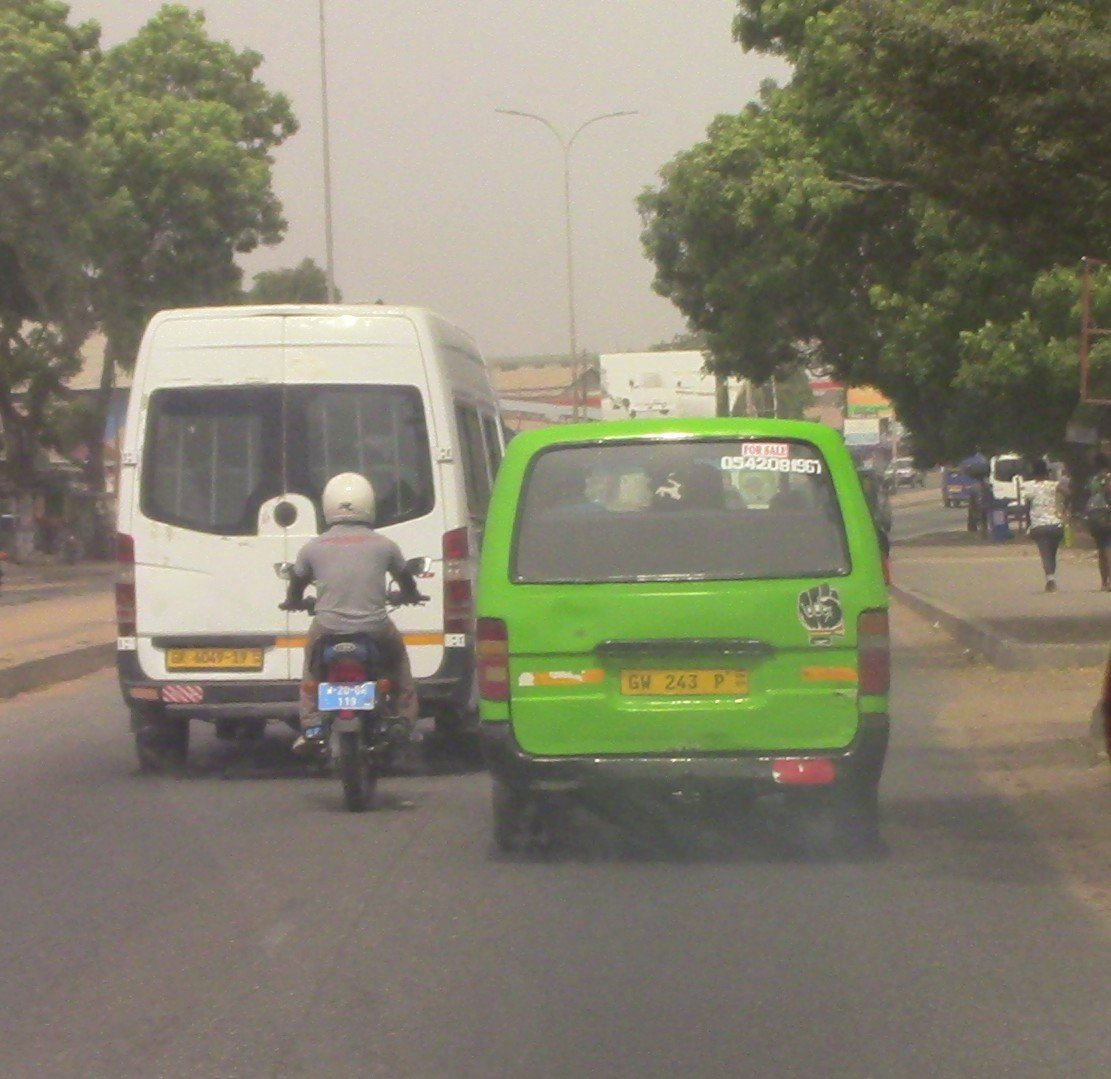
Commuters across Ghana are paying 8 per cent more for trotros, shared taxis and inter-city buses from today, as a new fare schedule agreed between transport unions and the government takes effect nationwide.
Main photo: NanaYawBotar / Wikimedia Commons, CC BY-SA 4.0
What changes from Saturday
The increase, which came into force on Saturday 26 September, covers the vehicles that carry the bulk of Ghana’s daily commuters: trotros, shared taxis, inter-city coaches and haulage services.
It was agreed by the Ghana Private Road Transport Union (GPRTU) and the Ghana Road Transport Coordinating Council (GRTCC) in consultation with the Ministry of Transport, and was first announced on 22 September.
Under the revised schedules, an inter-city journey that cost GH¢100 now costs GH¢108, while a GH¢300 trip rises to GH¢324. Shorter urban fares have been adjusted and rounded in the published tables, with a GH¢10 ride reportedly now set at GH¢11.
Why operators pushed for a rise
The unions say their costs have climbed steadily, pointing to fuel, spare parts and vehicle maintenance. A joint review team made up of the ministry, the GPRTU and the GRTCC was set up to examine those cost pressures before the final figure was settled.
During earlier negotiations in early September, the government outlined a GH¢2-per-litre intervention on diesel, intended to soften the blow for both operators and passengers, according to local reports.
Rules for drivers
Operators have been told to display the approved fare schedules at lorry stations and terminals, and drivers who charge above the approved rates could face sanctions, the unions have warned. Passengers are being encouraged to check the displayed charts before paying.
Why it matters
Transport costs feed directly into the price of food, school runs and the working day for millions of Ghanaians, many of whom rely on trotros as their only affordable way to move around cities such as Accra and Kumasi. Even a single-digit rise lands hardest on low-income workers and traders.
For Ghanaians abroad who send money home, the change is another reminder of how everyday living costs are shifting for family members. The sector’s finances have been under the spotlight recently, with the state-owned operator reporting improved results — read more in Metro Mass Transit returns to profit as revenue rises to GH¢161.85m.
DGBN will follow how commuters and operators respond as the new fares bed in.
Leave a Reply