
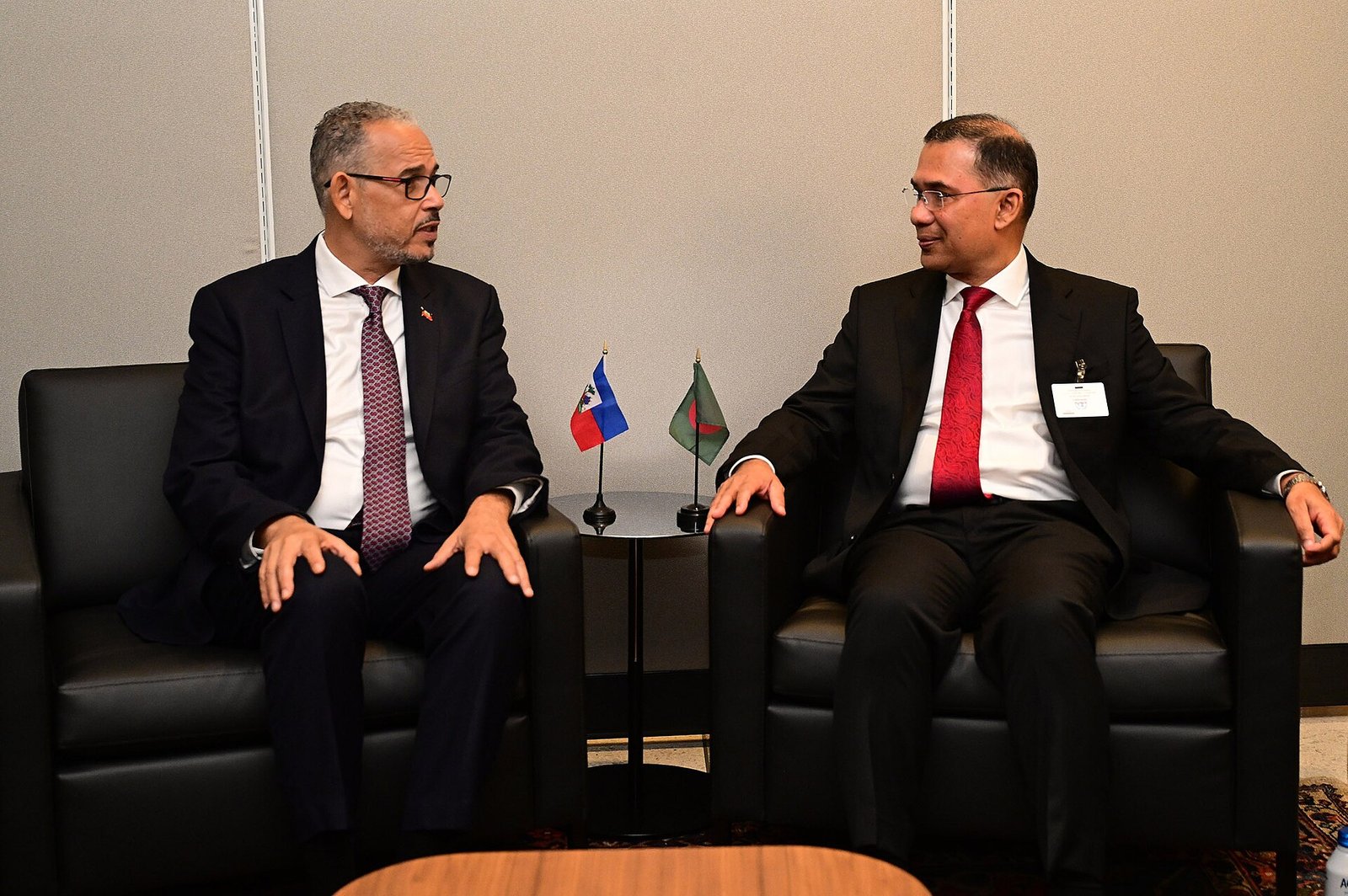
Haiti will not be rescued from the outside but will fight its own way back, Prime Minister Alix Didier Fils-Aimé told world leaders at the United Nations on Saturday, as he pressed for the full deployment of the international force meant to help crush the gangs.
Main photo: Press Information Department / Wikimedia Commons, Public domain
Speaking in the general debate of the 81st UN General Assembly in New York, Fils-Aimé described his country as standing at a turning point in its battle against armed groups, according to a report carried by the Caribbean Media Corporation (CMC).
His message was one of defiance. Haitians, he said, would resist and stand tall, and it would not be outsiders who decided the nation’s future. What Haiti wants from its partners, he argued, is for them to stand alongside it, not to swoop in as saviours.
“A mandate is not enough”
The sharpest part of the address was aimed at the Gang Suppression Force, the UN-backed mission that is supposed to support Haitian police and soldiers. Fils-Aimé said the force is still well short of its planned strength of 5,500 personnel.
He urged member states to renew its mandate and, crucially, to give it the people, equipment and money it needs to operate at full capacity. Authorisation on paper, he warned, would not by itself change the situation on the streets.
Building Haiti’s own forces
The prime minister set out what his government says it is doing at home. More than 2,000 police officers have been trained so far, against a target of 4,000, and more than 1,500 soldiers have completed training. The plan is to train a further 15,000 soldiers over the next three years.
He also pointed to two specialised judicial hubs, one for financial crimes and one for sexual violence, the revival of a national disarmament commission and a crackdown on the trafficking of illegal weapons into the country.
Elections on the horizon
Fils-Aimé said elections are scheduled for December 2026, a date that will be closely watched after years without a functioning elected government. DGBN has previously examined the stakes in Haiti’s long road back to the ballot box.
The scale of the crisis remains vast. Gangs control much of Port-au-Prince and the main roads out of the capital, around 6.4 million people need humanitarian assistance and some 1.5 million have been forced from their homes. Recent violence, including the deadly gang attack in Kenscoff, has shown how far the armed groups can reach.
Why it matters
Haiti, the first Black republic, has long carried a symbolic weight across Africa, the Caribbean and the diaspora. Fils-Aimé’s insistence on partnership rather than rescue speaks to a history of foreign interventions that many Haitians feel left the country weaker. Whether the world answers his call with real resources, and not just resolutions, will shape the months leading up to December’s vote.
Leave a Reply