
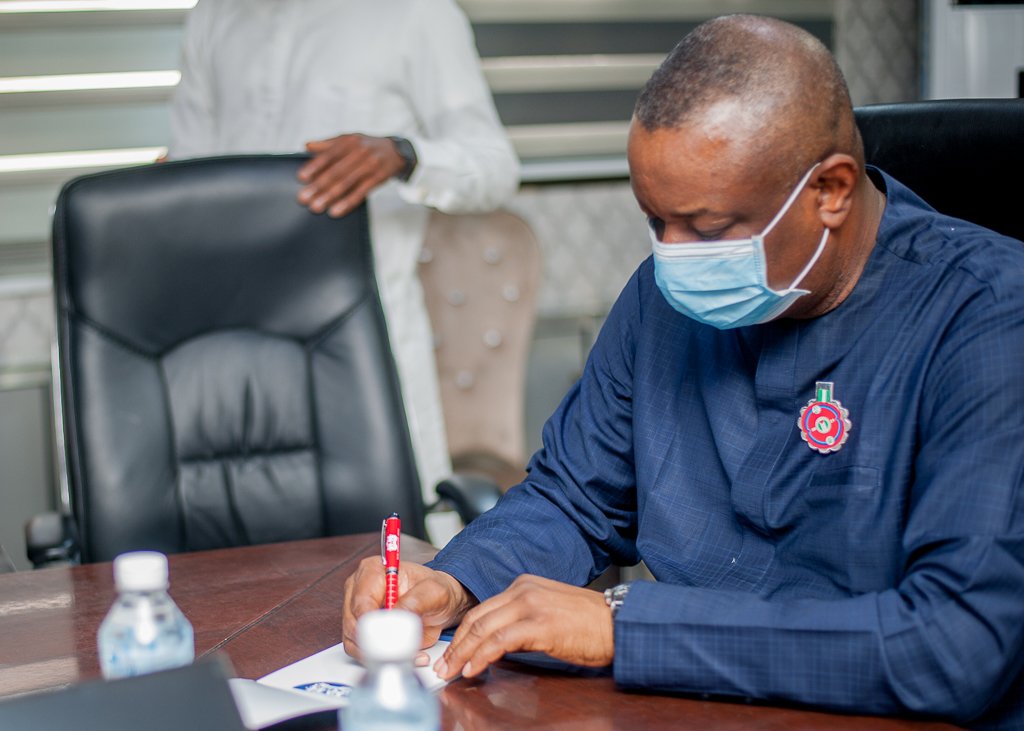
Photo: Kaizenify / Wikimedia Commons, CC BY-SA 4.0
Nigeria’s aviation sector has made tangible regulatory and commercial gains under Aviation Minister Festus Keyamo, but claims of a transformation worth “billions” require more public evidence.
What has changed
The most consequential shift has been Nigeria’s removal from the Aviation Working Group blacklist after reforms tied to the Cape Town Convention, an international framework governing aircraft finance and leasing. The Federal Government says Nigeria’s compliance score rose to 75.5 per cent after court and regulatory measures strengthened the enforcement of creditors’ rights and aircraft deregistration procedures.
DGBN has also reported on Ghana welcomes Uganda Airlines as new Accra service links East and West Africa.
That matters because Nigerian airlines have long faced higher costs and tighter access to dry-leased aircraft. A stronger legal environment can make it easier for operators to secure aircraft on more competitive terms, potentially improving fleet availability, routes and fares over time.
The government says successful dry-lease transactions have already followed the reforms. However, no independently verified public figure was provided for the value of new financing or investment directly attributable to Nigeria’s removal from the blacklist.
Lagos terminal dispute resolved
Keyamo has also overseen an agreement intended to end the long-running dispute involving the Federal Government, the Federal Airports Authority of Nigeria and Bi-Courtney Aviation Services over Murtala Muhammed Airport Terminal Two in Lagos.

For more context, read DGBN’s coverage of TAAG to launch Luanda–Praia flights on 12 December.
The agreement, signed on 20 October, followed Federal Executive Council approval in April. It covers the terminal, the General Aviation Terminal and related commercial facilities. According to the government, Bi-Courtney waived historical claims, while the state and FAAN gave up specified claims of their own.
Channels Television reported that Bi-Courtney wrote off a N132 billion judgement-debt and interest claim under the settlement. The arrangement is expected to allow the government to receive revenue from MMA2 while permitting Bi-Courtney to expand its apron and operate regional African services, subject to capacity and agreed conditions.
Why this matters
For Nigeria’s travellers, workers and businesses, aviation reform is about more than political credit. Better access to aircraft finance could help Nigerian carriers expand rather than surrender lucrative routes to foreign airlines. A durable settlement at Lagos’s busiest airport could also reduce legal uncertainty, unlock commercial activity and support jobs.
But implementation will determine whether these policy gains become lasting public benefits. Airlines still face high operating costs, foreign-exchange pressures, fuel prices and infrastructure constraints. The government must also demonstrate that new investor confidence translates into safer operations, reliable services and affordable connectivity for Nigerians.
Related DGBN reporting includes High travel costs threaten Africa’s business tourism ambitions.
Nigeria’s aviation reforms have therefore created a credible opening. The next test is whether that opening produces measurable investment, stronger domestic airlines and a better passenger experience.