
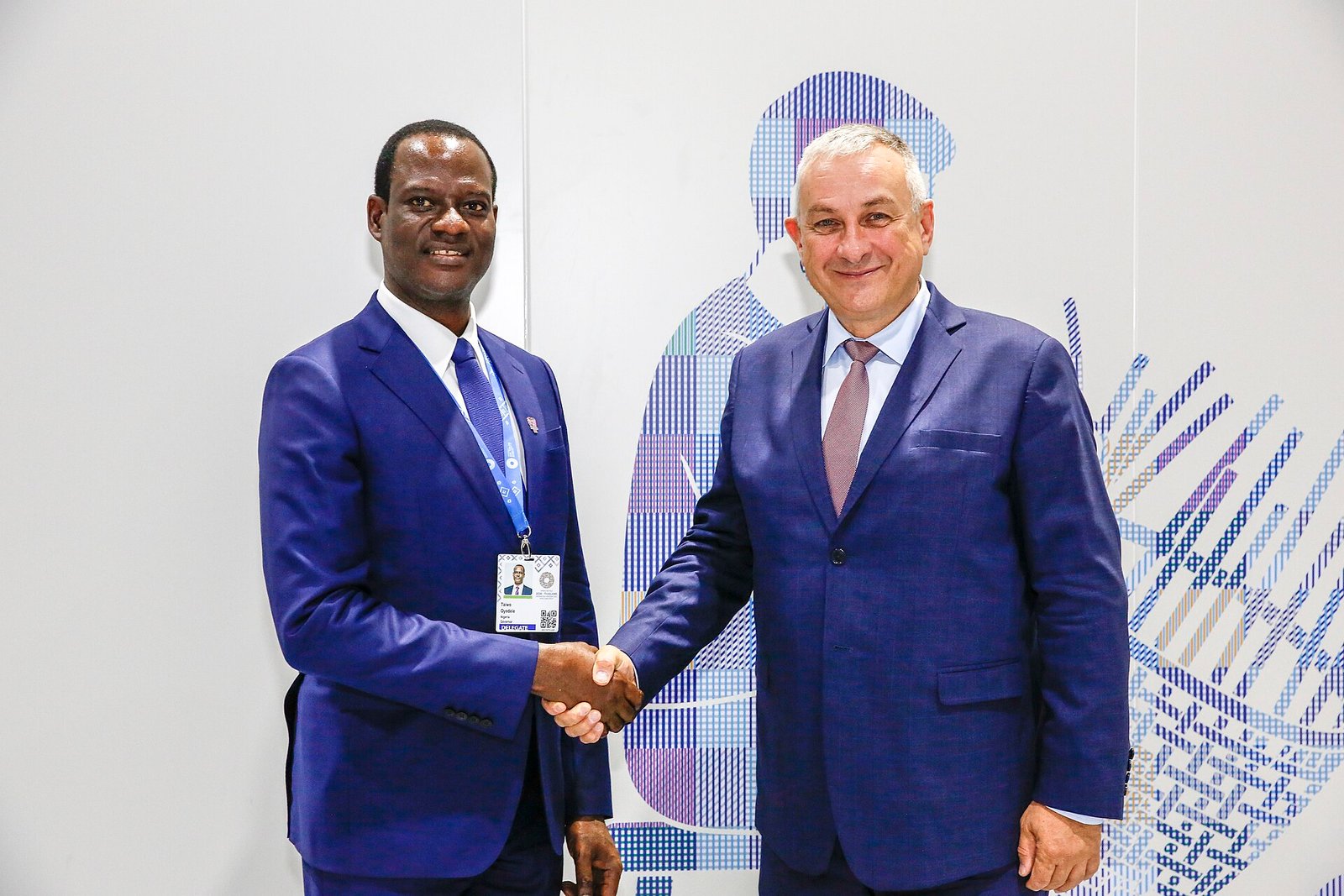
Photo: Alisa Suwanrumpha / Wikimedia Commons, CC BY 4.0
Nigeria’s Federal Government has defended a proposed $21.7 billion external borrowing plan, arguing that it is intended to create long-term economic assets rather than deepen debt for consumption.
Government says plan is not yet a drawdown
Finance Minister and Coordinating Minister of the Economy Taiwo Oyedele said the package combines $20.52 billion and €1.045 billion proposed for the 2026–2027 fiscal period.
DGBN has also reported on Tinubu aides promise broader infrastructure push across Nigeria.
Speaking after a Federal Executive Council meeting in Abuja, Oyedele said the figure is a financing plan, not money already borrowed. He said Nigeria would not necessarily draw the full amount and that the projects are expected to run over an average period of five years.
The government says the financing would support transport, security, health, agriculture, electricity, digital infrastructure, education, social protection and other development priorities. Transport is expected to receive the largest share, including funding linked to major road and rail projects.
The case for productive debt
Oyedele argued that borrowing can be justified where it produces assets, jobs, higher productivity and economic returns greater than the cost of the loans. The government has framed the proposal as a route to closing infrastructure gaps that constrain businesses and raise the cost of moving goods across the country.
Among measures approved by the cabinet was a €155.9 million credit facility involving Deutsche Bank and other lenders for upgrades to power substations under the Presidential Power Initiative. Officials say the work would improve electricity reliability for households and businesses.
For more context, read DGBN’s coverage of Nigeria looks to UAE AI model as it builds digital public services.
For Nigerians, the central test will be whether promised investments translate into dependable power, safer roads, functioning rail services and lower logistics costs — rather than adding obligations that future budgets must service.
Critics demand transparency
The proposal has drawn criticism from opposition figures and business representatives, who say any new debt should be tied to publicly identifiable projects with measurable outcomes.
Former vice-president Atiku Abubakar has called for the National Assembly to halt consideration until the government publishes details of the projects to be financed. The Association of Small Business Owners of Nigeria has also warned that borrowing should produce demonstrable returns, including employment, revenue and stronger domestic productive capacity.
Those concerns reflect a wider public debate over public borrowing in a country where households and small firms continue to face high living costs, expensive energy and weak infrastructure.
What happens next
President Bola Tinubu has requested parliamentary approval for the supplementary external borrowing plan. Legislative scrutiny will determine which components proceed and under what terms.
Related DGBN reporting includes Tinubu seeks approval for $21.7bn external borrowing plan.
The government’s defence rests on a clear proposition: that loans used for durable, income-generating public assets can strengthen Nigeria’s economy. Its credibility will depend on transparent terms, disciplined implementation and evidence that projects deliver benefits citizens can see.