
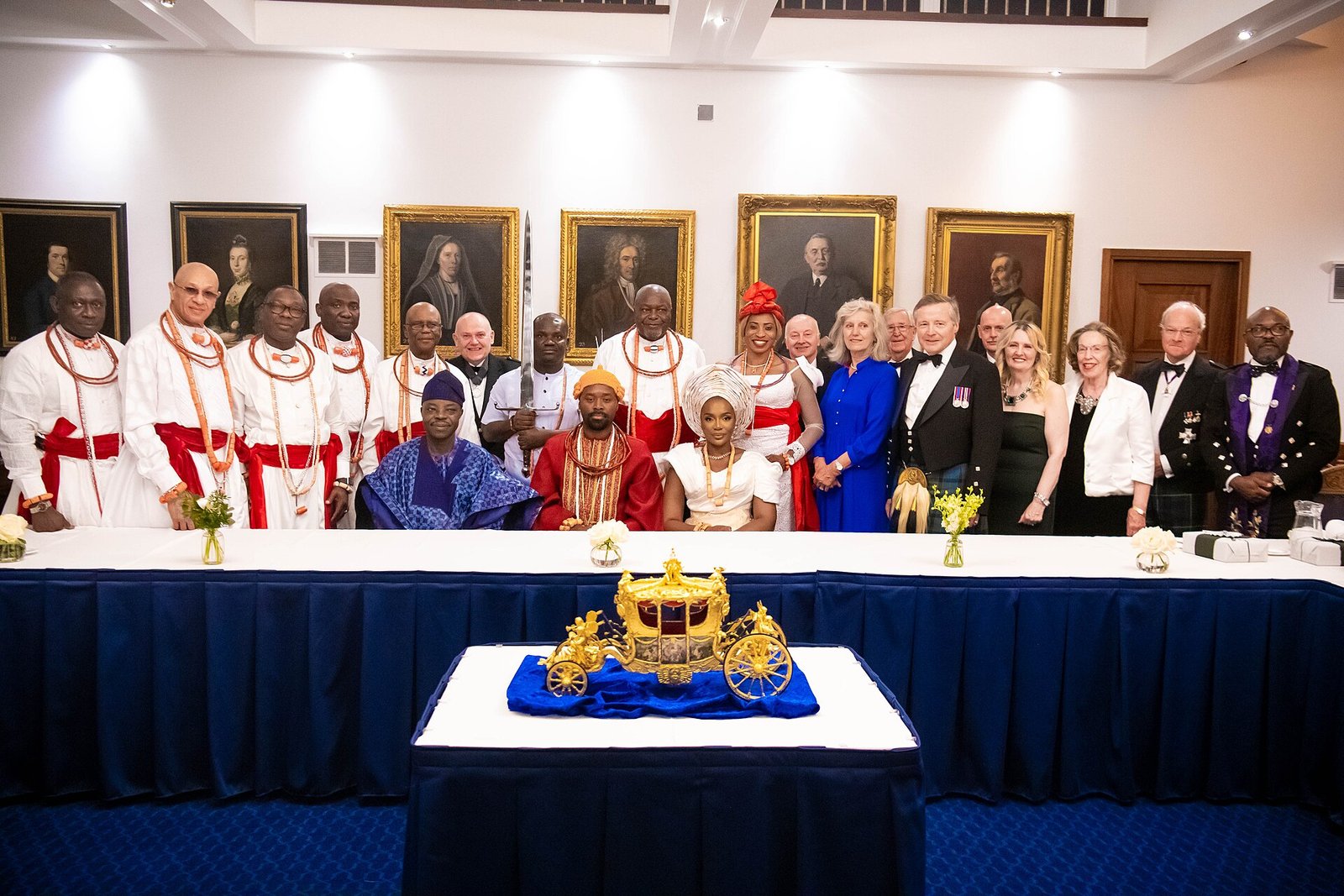
Photo: Blackmeister / Wikimedia Commons, CC BY 4.0
Olori Atuwatse III has urged African creatives and leaders to ensure the continent retains ownership of the stories, ideas and economic value generated by its culture.
Call at Accra convening
The Queen Consort of the Warri Kingdom made the case through Elevate Africa, the Pan-African platform she co-founded with the Olu of Warri, Ogiame Atuwatse III. Its 2026 convening opened in Accra, Ghana, on Wednesday, October 28, under the theme Africa: Defining Her Future.
DGBN has also reported on Warri Queen Calls for African Ownership of Creative Economy Value.
The two-day event brought together political figures, business leaders, investors, creatives, youth representatives and members of the African diaspora for discussions on leadership, trade, culture and economic opportunity, according to LEADERSHIP.
While the report did not publish a full transcript of Olori Atuwatse III’s remarks, its account of the gathering placed the creative economy among the central areas under discussion. Elevate Africa describes its work as advancing African-led solutions, cultural integrity and a stronger global narrative for the continent.
Ownership beyond visibility
The message matters because Africa’s music, film, fashion, publishing and digital content have unprecedented global reach, yet the crucial questions are not only who is seen, but who owns the intellectual property, platforms, finance, distribution networks and audience data.
For Black creators across Africa and the diaspora, cultural influence does not automatically produce lasting wealth. Without ownership, the commercial rewards from African creativity can be captured elsewhere, while creators remain dependent on external gatekeepers and markets.
For more context, read DGBN’s coverage of Asian markets gain after Wall Street rally, but Treasury yields stay near 24-year highs.
Elevate Africa says its cultural enterprise programme, Threads of Africa, is intended to preserve heritage while creating opportunities for creatives who carry it forward. The wider platform also links culture with trade, investment and leadership, framing creative work as a serious economic asset rather than an afterthought.
A wider demand for African agency
The appeal aligns with the argument made by the Olu of Warri in his opening address. He said Africa’s long-term prosperity should be built on the skills, knowledge, creativity and ingenuity of its people, rather than dependence on natural-resource extraction.
He also urged African institutions to make opportunity more accessible on the basis of competence rather than connections, and called for partnerships founded on mutual respect and shared benefit.
That framework is especially relevant to creative industries, where young Africans are often the source of global trends but have limited access to legal protection, capital, production infrastructure and routes to market.
Why it matters
Africa’s creative economy is about more than entertainment. It is a vehicle for jobs, cultural memory, soft power and the right of Black communities to represent themselves on their own terms.
Related DGBN reporting includes WTTC and ICC sign pact to strengthen travel and tourism SMEs.
Olori Atuwatse III’s intervention places a clear challenge before governments, investors and creative businesses: celebrate African culture, but also build African ownership around it. That means protecting rights, investing in talent and ensuring that the value created by African stories remains connected to African people.