
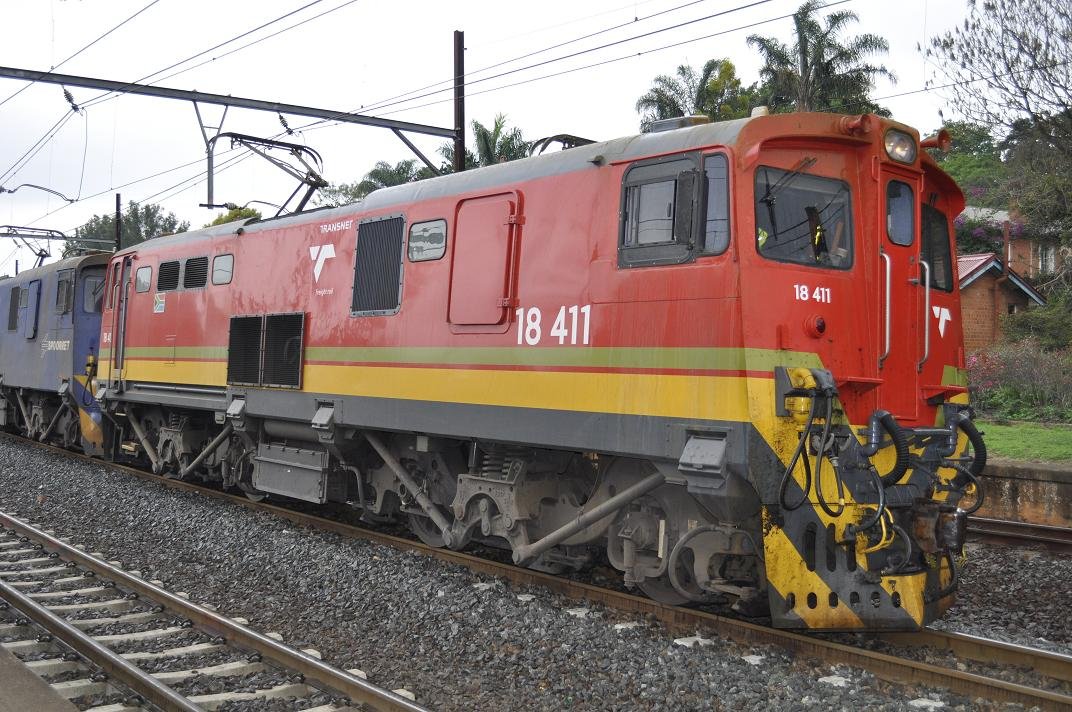
Photo: SAR Connecta / Wikimedia Commons, CC BY-SA 3.0
South Africa’s promised infrastructure revival will be judged not by its price tag, but by whether communities and businesses can see working roads, water systems, railways and electricity networks.
A large pipeline, with a delivery test
Finance Minister Enoch Godongwana used the Medium-Term Budget Policy Statement on 21 October to place infrastructure at the centre of the government’s growth strategy. He said the Infrastructure Finance and Implementation Support Agency is supporting projects with a potential investment value above R217 billion, while 68 projects sit in the public-private partnership pipeline, including 31 municipal schemes.
DGBN has also reported on Morocco overtakes South Africa in RMB’s African investment ranking.
The direction is clear: South Africa wants to move spending towards assets that expand productive capacity, improve public services and create employment. The stakes are especially high in communities where unreliable water, failing roads and weak sanitation systems are not abstract policy problems but daily barriers to work, education, health and dignity.
Yet the latest intervention also exposes the country’s central problem. Project preparation, procurement, financing and execution must improve at the same pace as announcements. New agencies and regulations can help, but they cannot substitute for capable institutions that can plan, maintain and complete projects.
Private capital has a role — but the state remains responsible
Government says the revised municipal PPP regulations have been submitted to Parliament, the final stage before implementation. The intended reforms would make it easier for municipalities to partner with private companies in delivering infrastructure and services.
That could unlock expertise and finance where local capacity is weak. It may also speed up projects that have been delayed by poor planning or fragmented responsibilities.
For more context, read DGBN’s coverage of Radisson opens Africa’s first verified net-zero hotel in South Africa.

But private investment is not a replacement for public obligation. Bulk water, sanitation, electricity transmission and transport networks are foundations of social and economic life. The state must set standards, protect the public interest, ensure fair procurement and make sure poorer communities are not left behind because a project offers limited commercial returns.
Reform progress offers a narrow opening
Business Leadership South Africa’s latest Reform Tracker reported renewed momentum during July to September, driven chiefly by progress in electricity and freight logistics. Its completion index rose to 72.5, the highest level since the tracker began in March 2024.
That progress matters. More dependable power and logistics can lower costs for manufacturers, miners, farmers and small businesses, helping protect jobs and attract new investment. But the tracker also found weaker performance in governance and in the push for an independent infrastructure manager — warnings that institutional reform remains incomplete.
South Africa does not lack a list of projects or grand investment targets. It needs visible construction, dependable maintenance and transparent delivery. For Black South Africans, who bear a disproportionate burden when public services fail and unemployment remains severe, infrastructure delivery is ultimately about economic inclusion and everyday security — not concrete alone.
The measure of success
The government should welcome private-sector participation where it brings skills, funding and accountability. But it must also build public capacity and insist on projects that serve the broadest public need.
Related DGBN reporting includes Russia-Africa summit shifts focus from diplomacy to delivery.
For wider context, see Ivory Coast 0-1 Cameroon: Nsongo wins it for the Indomitable Lions on Diajem Sports Network.
The test is simple: whether infrastructure spending reaches streets, homes, schools, clinics and workplaces in a form that lasts.