
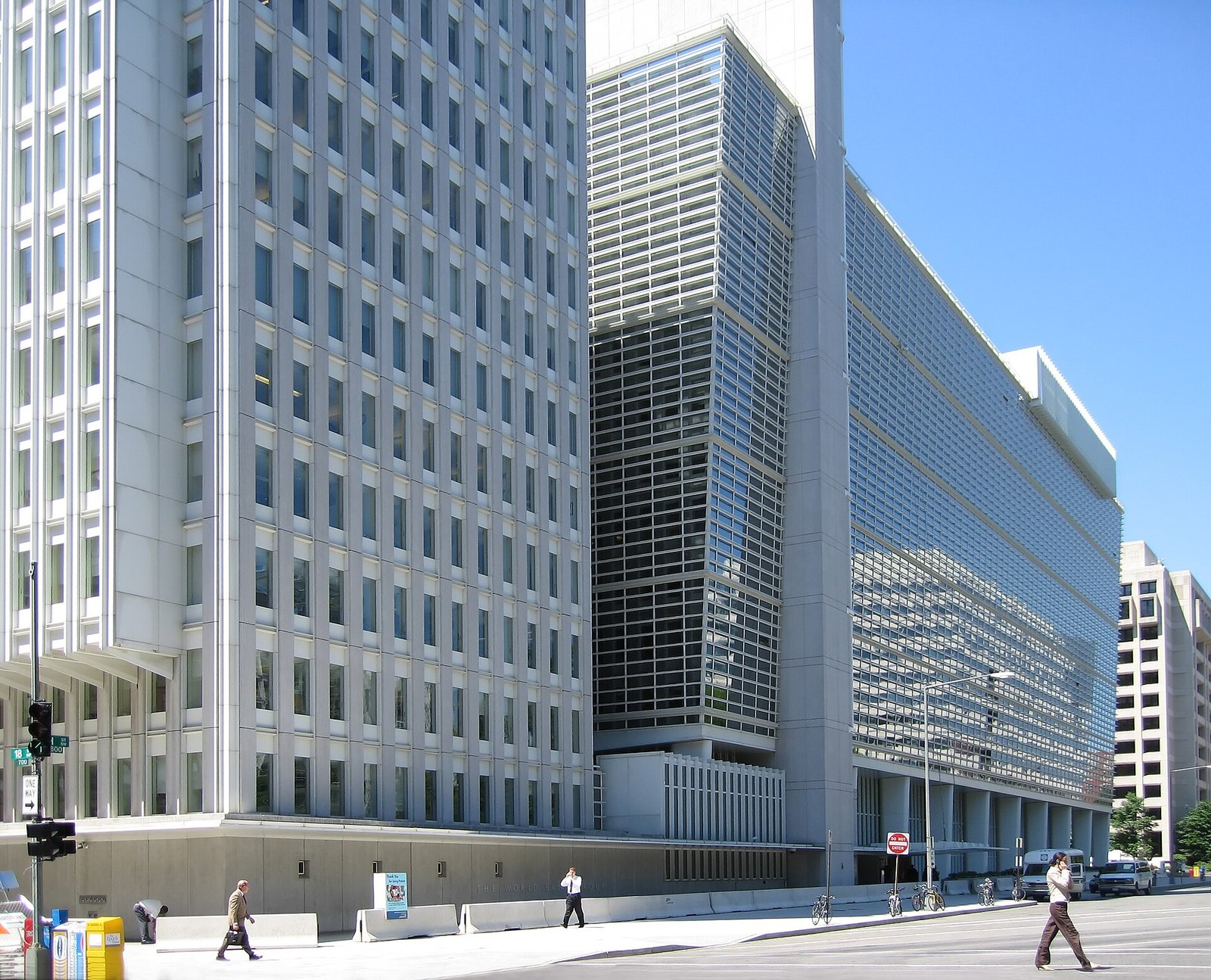
Photo: Shiny Things / Wikimedia Commons, CC BY 2.0
Africa’s development cannot rest indefinitely on foreign-currency borrowing when domestic savings could help fund its own future.
The argument for financing from within
In an open letter published on 26 October, author Aboubakr Kaira Barry urged IMF managing director Kristalina Georgieva and World Bank president Ajay Banga to make the building of domestic bond markets a central test of development finance.
DGBN has also reported on Ato Forson Vows Ghana Will Beat IMF’s Upgraded 5.7% Growth Forecast.
The intervention is an opinion-led call rather than a new IMF or World Bank policy. Its central argument is that African governments need more long-term finance in local currencies for infrastructure, schools, hospitals and power systems — reducing exposure to currency swings that can make foreign debt far more expensive to repay.
The IMF and World Bank have already recognised the importance of such markets. Their 2021 joint guidance note says stable inflation, credible monetary policy, sound debt management and transparent market infrastructure are key conditions for developing local-currency government bond markets.
Call for safeguards before lending
Barry argues that multilateral lenders should require independent checks before approving programmes or major projects, confirming that protections against corruption, opaque procurement and weak fiscal reporting are operating.
He proposes that financing should be released in stages when agreed safeguards are demonstrably met, while emergency humanitarian support after disasters, pandemics or conflict would not be delayed.
For more context, read DGBN’s coverage of Capital XTRA spotlights Black British pioneers for Black History Month.
The letter also calls for independent central banks, stronger bank supervision, constitutional limits on borrowing for day-to-day spending, clearer public-investment appraisal and deeper secondary bond trading. These are proposals from the author, not commitments announced by either institution.
The IMF-World Bank framework similarly stresses that high or volatile inflation, unstable exchange rates and direct central-bank financing of government can deter investors from holding long-dated domestic debt. It points to stronger market data, trading systems and investor bases as practical building blocks.
Why this matters for African households
The debate matters because debt costs can narrow governments’ room to spend on jobs, social services and climate resilience. Borrowing in a foreign currency can become especially punishing if a local currency loses value, leaving citizens to absorb the impact through higher taxes, reduced public spending or inflation.
More credible local markets could allow pension funds, insurers and savers to finance national investment while giving governments a more predictable funding base. But domestic borrowing is not automatically cheaper or safer: without fiscal discipline and investor confidence, it can still drive up interest costs and crowd out private-sector lending.
The wider economic opportunity is significant. World Bank analysis has estimated that full implementation of the African Continental Free Trade Area could raise Africa’s real income by 7 per cent by 2035. Reliable domestic finance would help countries invest in the transport, energy and productive capacity needed to make those trade gains real.
A test for global lenders
For Black communities across Africa and the diaspora, the question is ultimately who carries the risk of development. The letter challenges the IMF and World Bank to measure success not by the volume of loans approved, but by whether countries can increasingly finance productive investment on fairer, sustainable terms from within their own economies.
Related DGBN reporting includes Tinubu Defends Tough Reforms in Nigeria’s Independence Day Address.
That would require both international institutions and African governments to accept harder standards of transparency, accountability and long-term economic planning.