

The third Russia-Africa Summit opened in Moscow on Wednesday with African governments seeking investment, technology and trade arrangements that produce results beyond political declarations.
A test of practical partnership
The two-day Russia-Africa Summit and Economic and Humanitarian Forum brings together leaders, officials, business figures and academics on 28-29 October. Russian and Zimbabwean state-linked reporting says energy security, artificial intelligence, digital transformation and agriculture are among the core subjects, with more than 30 African countries expected to participate.
DGBN has also reported on Mahama vows to get Ghana Airways flying again before he leaves office.
The meeting follows summits in Sochi in 2019 and St Petersburg in 2023. The 2023 gathering produced a 2023-2026 action plan, while the Moscow summit is expected to consider a successor plan for 2027-2029.
For African states, the central question is whether agreements can support industrialisation, skills, food production and local value addition — rather than simply expand diplomatic ties.
Trade remains uneven
Russia-Africa trade rose from US$16.8 billion in 2019 to US$27.1 billion in 2025, according to figures cited by Russian analysts. But the exchange remains heavily weighted towards Russian sales: exports to Africa were put at US$22.7 billion, against roughly US$4.4 billion in African imports to Russia.
That imbalance matters. A partnership built chiefly around African purchases of food, fertiliser, fuel, machinery and services does not automatically create jobs or processing capacity on the continent.
For more context, read DGBN’s coverage of Fitch says South Africa’s debt may rise again as growth outlook weakens.
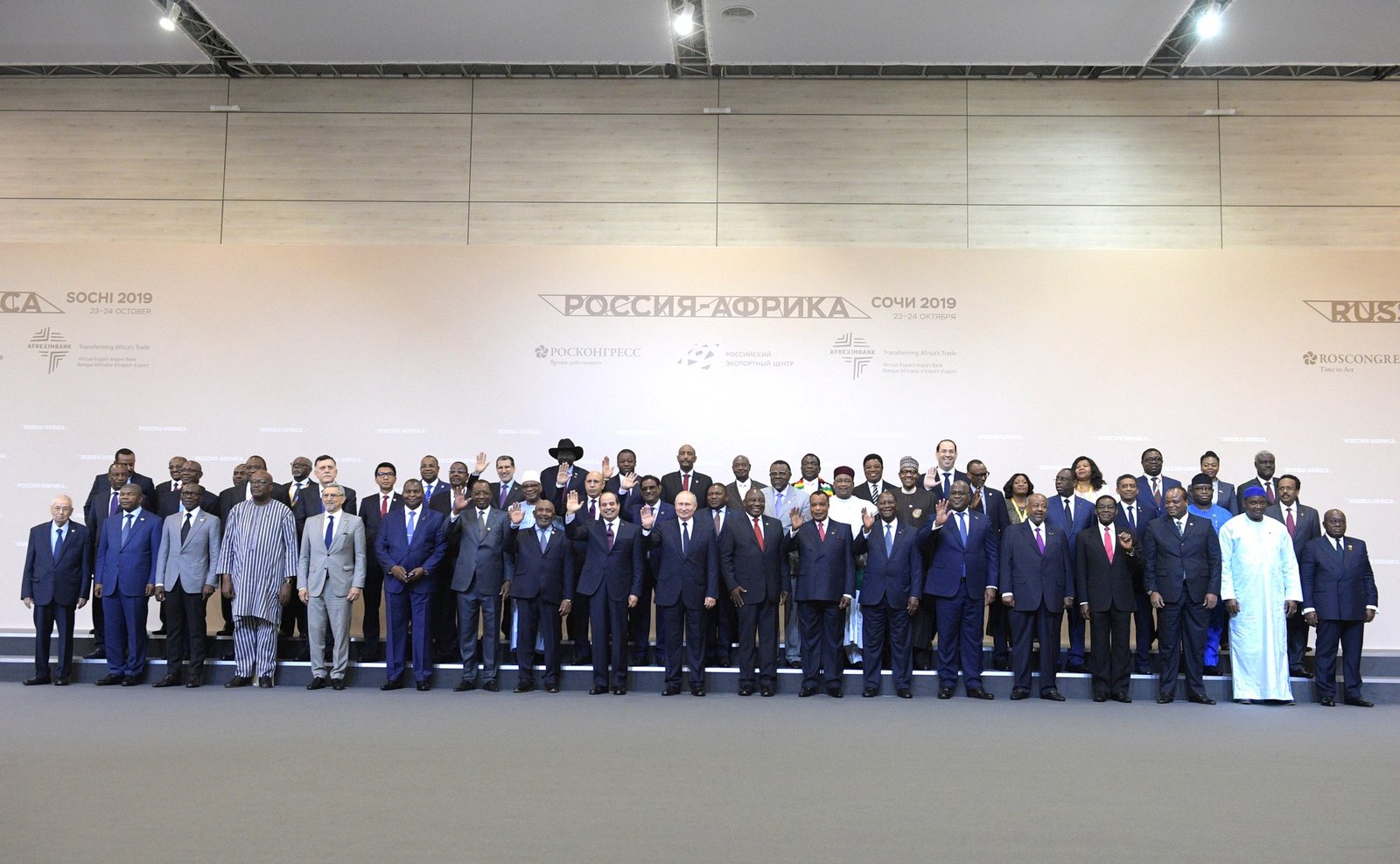
Russia has identified agriculture, mining, nuclear energy, digital systems, information security and education as priority areas. Egypt’s El Dabaa nuclear plant, still under construction, is among Moscow’s highest-profile projects in Africa.
Zimbabwe seeks concrete gains
Zimbabwean President Emmerson Mnangagwa is attending, with Harare looking for cooperation in agriculture, mining, energy, infrastructure and manufacturing. The Herald reported that Zimbabwe-Russia trade was about US$80 million in 2025.
Zimbabwe’s interest reflects a wider continental demand: investment that strengthens domestic production, technology transfer and training, rather than resource extraction without broad economic returns.
Russia has also pointed to educational links, with its foreign ministry saying about 40,000 African students are studying in the country. Such exchanges can matter if qualifications are linked to projects and employment opportunities at home.
Delivery will define the summit
Moscow presents the summit as an opportunity to move from agreements to implementation. But analysts at Chatham House say Russia’s economic delivery across Africa remains limited, while its resources are constrained by the continuing war in Ukraine.
They argue that attendance figures and headline announcements are not a reliable measure of durable partnerships. The sharper test will be whether the next action plan has clear timelines, financing, logistics and accountable projects.
Related DGBN reporting includes Mnangagwa takes Zimbabwe’s development agenda to Russia-Africa Summit.
For wider context, see Croatia v England preview: Tuchel warns his side not to fall asleep in Rijeka on Diajem Sports Network.
For Black communities across Africa and the diaspora, the summit matters because it concerns who finances the continent’s energy transition, digital future and industrial growth. African governments are increasingly diversifying their global relationships; the measure of any external partner should be whether its deals expand African ownership, decent work and long-term economic sovereignty.