
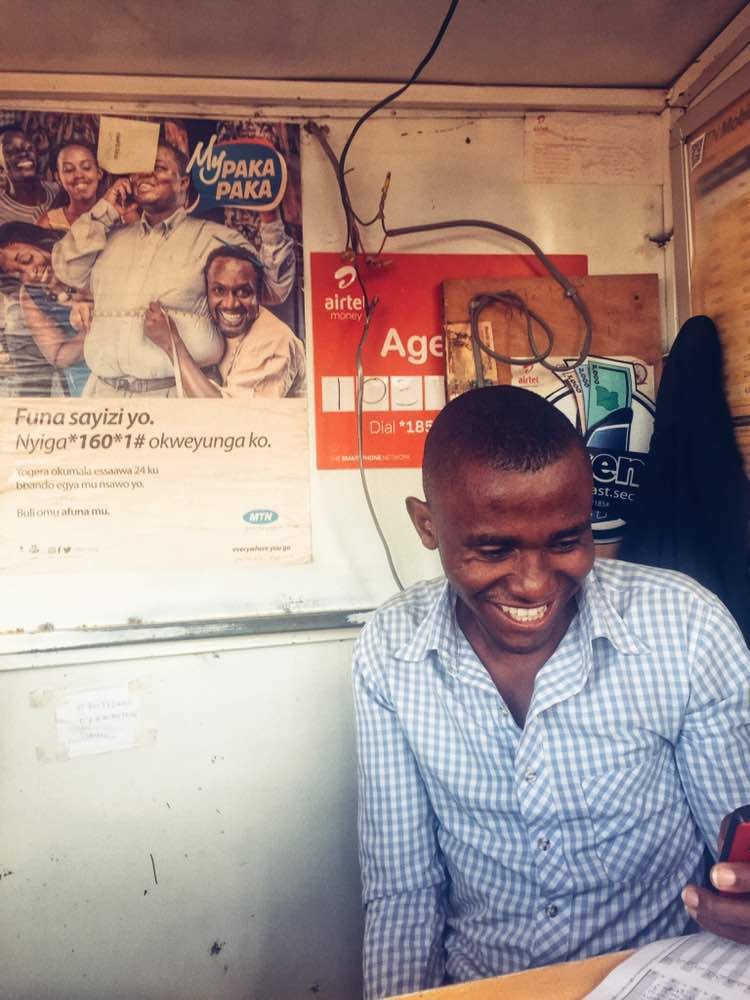
Photo: Emolot / Wikimedia Commons, CC BY-SA 4.0
Airtel Africa has reported a 20.5% rise in half-year profit after tax to $452 million, underlining the growing economic weight of mobile data and digital finance across its African markets.
Revenue growth across key services
The London-listed telecommunications group said revenue reached $3.823 billion for the six months to 30 September 2026, up 28.2% in reported currency from $2.982 billion a year earlier. On a constant-currency basis, which strips out exchange-rate movements, revenue rose 20.8%.
DGBN has also reported on Nigeria targets local cloud shift after MDAs spend ₦3.8tn on technology.
Underlying EBITDA — a measure of operating earnings — climbed 32.8% to $1.921 billion. The company’s half-year EBITDA margin rose to 50.3%, while the second-quarter margin reached 50.4%.
Airtel Africa serves 14 markets across the continent. Its customer base grew 11.6% year on year to 193.9 million, while data customers increased 15% to 89.9 million.
Digital demand drives the result
Data revenue rose 35.3% to $1.571 billion, reflecting both more users and heavier smartphone use. Mobile money revenue increased 34.8% to $840 million, with its customer base reaching 60.9 million — up 22.4% from the previous year.
The company said total processed value through its mobile money operations increased 46.4% to $130.1 billion. That growth points to the central role telecom networks now play in everyday payments, transfers and access to financial services in many African communities.
For more context, read DGBN’s coverage of Why Nigeria is missing from Airtel Money’s $7bn IPO.
Nigeria remained a major contributor. Revenue there rose 44.6% in reported currency to $1.008 billion, helped by currency appreciation as well as 26.6% constant-currency growth. Data revenue in the market grew 33.8% in constant currency.
Costs and investment remain in focus
Airtel Africa said higher fuel costs created pressure in Nigeria, but its cost-efficiency programme helped limit the effect on margins. Group capital expenditure more than doubled to $657 million as the company continued investing in network capacity and digital infrastructure.
Profit before tax rose to $814 million, from $656 million. However, net finance costs increased to $477 million, including a $37 million exceptional cost linked to an in-principle commercial-dispute settlement at one subsidiary. The group also recorded $19 million in expenses related to the listing of Airtel Money.
Net debt stood at $5.87 billion, but leverage improved to 1.6 times underlying EBITDA from 2.1 times a year earlier.
Why it matters
The results show that Africa’s digital economy is being powered not only by traditional calls and connectivity, but by rising data consumption and mobile-based financial services. For Black communities across the continent and diaspora investors watching African technology, Airtel Africa’s numbers highlight both the scale of consumer demand and the importance of sustained investment in affordable, reliable digital infrastructure.
Related DGBN reporting includes Africa’s financial power map shifts as local capital and new banking hubs rise.
The company’s ability to sustain growth while managing energy costs, debt and currency volatility will be closely watched in the second half of its financial year.