
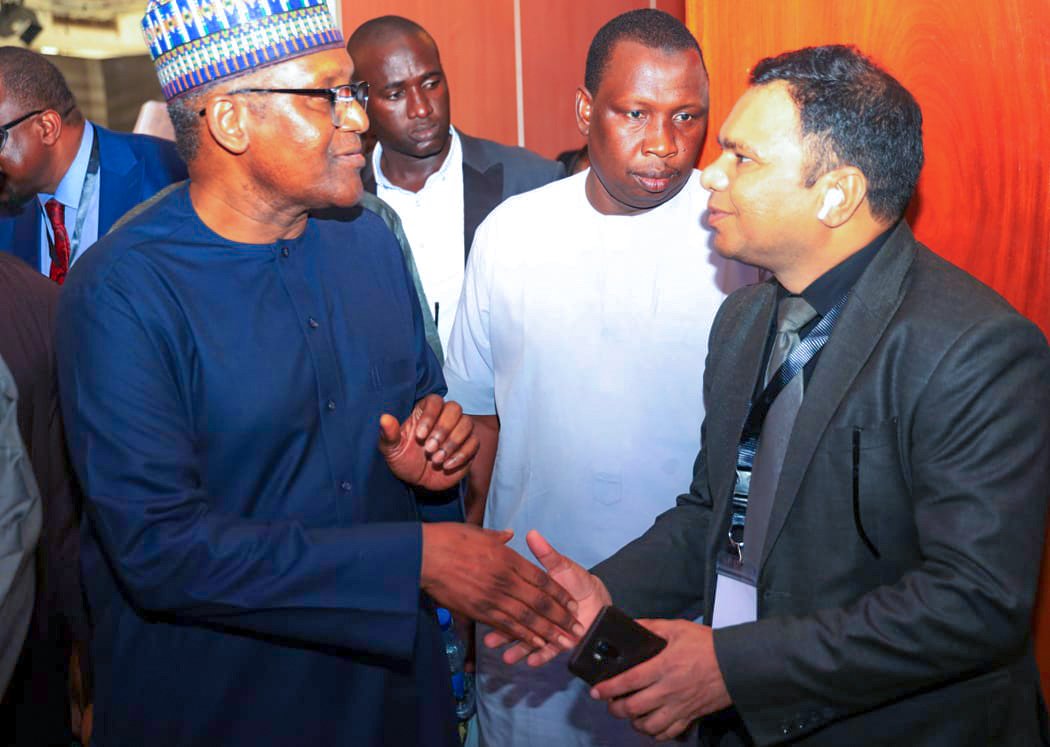
Photo: Maxwell / Wikimedia Commons, CC BY-SA 4.0
Dangote Group has urged Nigeria’s Federal Government to prioritise domestic production and reduce dependence on imports, arguing that industrial expansion is essential to jobs, exports and economic resilience.
Call at Abuja trade fair
The appeal was made by Dangote Group regional director Fatima Wali-Abdurrahman during the company’s special day at the 21st Abuja International Trade Fair on Friday, 2 October. She was represented by the group general manager, Abdullahi Dan-Musa.
DGBN has also reported on Sifuna demands Kenya publish Dangote refinery deal, citing constitutional right to information.
Original source: Original source.
Wali-Abdurrahman said Nigeria needed an investment climate that backed industrial growth, sustainable development and export-led businesses. She said firms were operating amid inflation, exchange-rate adjustments, changing tax policies, technological disruption and shifting global trade patterns.
Her central message was that Nigeria should build the capacity to process more of what it produces at home, rather than rely heavily on imported finished goods.
Manufacturing and jobs
The company said its investments span cement, sugar, salt, seasoning, packaging, fertiliser, petrochemicals and petroleum refining. Wali-Abdurrahman argued that local manufacturing has effects beyond factory gates, supporting suppliers, distributors, transport workers, contractors and retailers.
For more context, read DGBN’s coverage of Nigeria at 66: Abubakre Calls for Institutions That Outlast Resilience.
She also called for taxation that is predictable, transparent and efficient, saying public revenues are necessary for infrastructure, schools, health services and security, but should not discourage productive investment.
For Black communities across Nigeria, this argument matters because the debate over imports is also a debate about where jobs, skills and value are created. A stronger industrial base could widen opportunities for young workers and small businesses connected to domestic supply chains, while reducing pressure on foreign exchange.
Refining at the centre of the debate
Wali-Abdurrahman said the Dangote Petroleum Refinery has capacity of 700,000 barrels a day and is planned to expand to 1.4 million barrels a day. The company says the facility can strengthen energy security, curb imports of refined products and retain foreign exchange in Nigeria.
The group’s wider claims should be viewed in the context of an ongoing national policy debate over fuel imports, crude supply and competition in the downstream petroleum market. An Economist Intelligence Unit assessment cited by Dangote said the refinery had met nearly 80 per cent of domestic petrol demand in April as it approached full operations. Reuters also reported in September that the refinery had bought at least 16 million barrels of Nigerian crude for October delivery, equal to about 520,000 barrels a day, underlining the scale of feedstock needed for domestic refining.
Related DGBN reporting includes Senegal Fishing Communities Raise Sangomar and Coastal Erosion Concerns in Djifère.
The call from Dangote is therefore both a corporate position and part of a broader question facing Nigeria: whether its economic reforms can translate natural resources, markets and labour into locally owned productive capacity. The outcome will shape prices, employment, industrial skills and Nigeria’s position in African trade.